
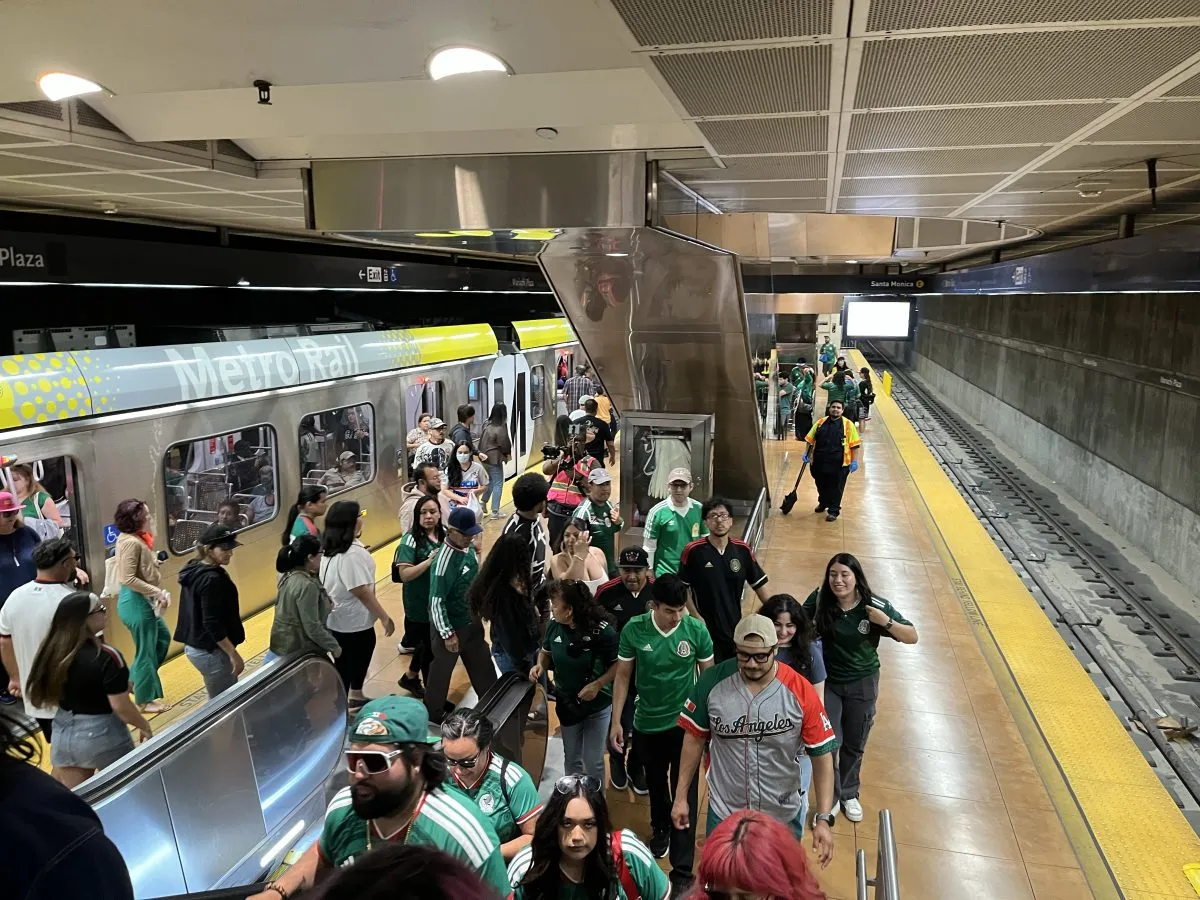

Public transit ridership in Los Angeles climbed in June, fueled largely by the FIFA World Cup, local community events and the continued integration of L.A.’s newest subway stations.
On Tuesday, LA Metro reported 26.2 million boardings on its bus and train lines over the span of June, an increase from the 23.8 million recorded in June 2025.
According to the agency, this 9% increase defied a traditional seasonal decline that typically occurs when local schools close for the summer.
A post on the Metro blog, the Source, described the period as “a big ridership month for Metro.”
This June marked the first full month of operations for the D Line extension stations at Wilshire/La Brea, Wilshire/Fairfax and Wilshire/La Cienega. The D Line saw total ridership growth of more than 45%, with Saturday figures rising by 70% compared to June 2024.
- The line was unavailable in June 2025 due to construction
Weekend ridership showed strong growth across the entire LA Metro network. Weekday ridership reached 953,820, an increase of 8.4% from the previous year, officials said. Saturdays saw a 13% increase to 708,826 boardings, while Sunday ridership grew by 7.7% to 611,534.
Read More: Canadian tourism to U.S. up in June but still down big since Trump return
Rail ridership totaled 6,561,484, marking a 21.8% year-over-year increase.
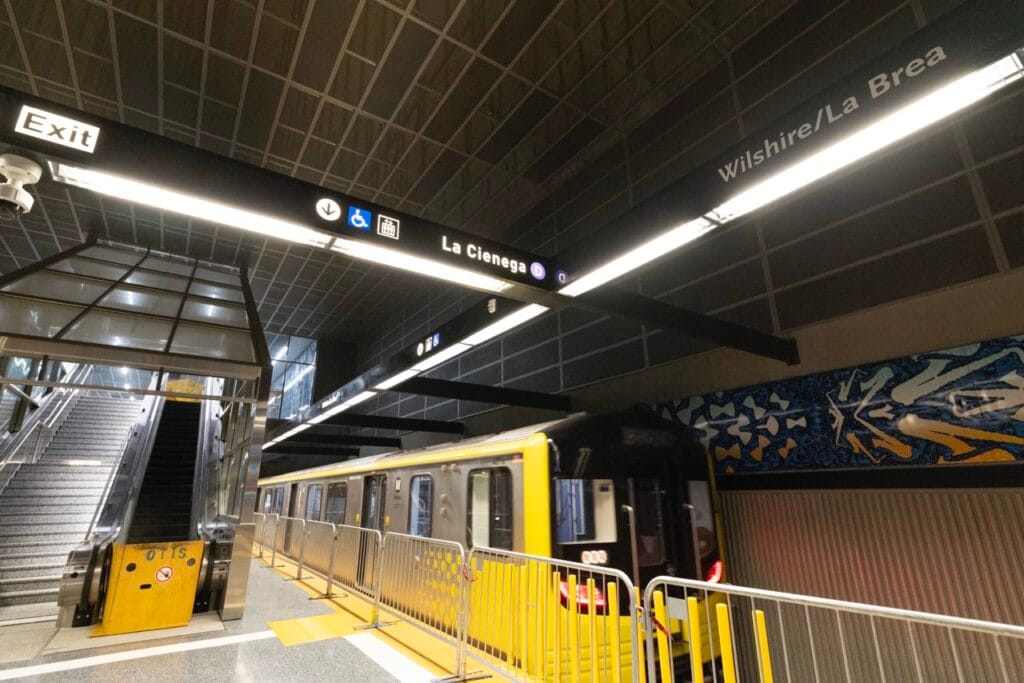
The A Line, LA Metro’s longest line and the longest light rail line in the world, led all gains with a 22.1% increase, while the B and D subway lines combined for 29.2% growth. The E Line grew 16.5% overall to 1,542,032, and the C Line increased 11.6% to 570,254. The K Line saw a 15.6% increase in ridership.
Bus ridership also rose by 6.8% to 19,703,996 total boardings, according to the Source.
FIFA World Cup helps LA Metro reach milestones
Metro officials linked the gains to service demands for the FIFA World Cup, as well as events such as Pride celebrations and concerts at the Hollywood Bowl. These figures exclude ridership on specific shuttle services to the stadium for matches operated by LA Metro and its regional partners.
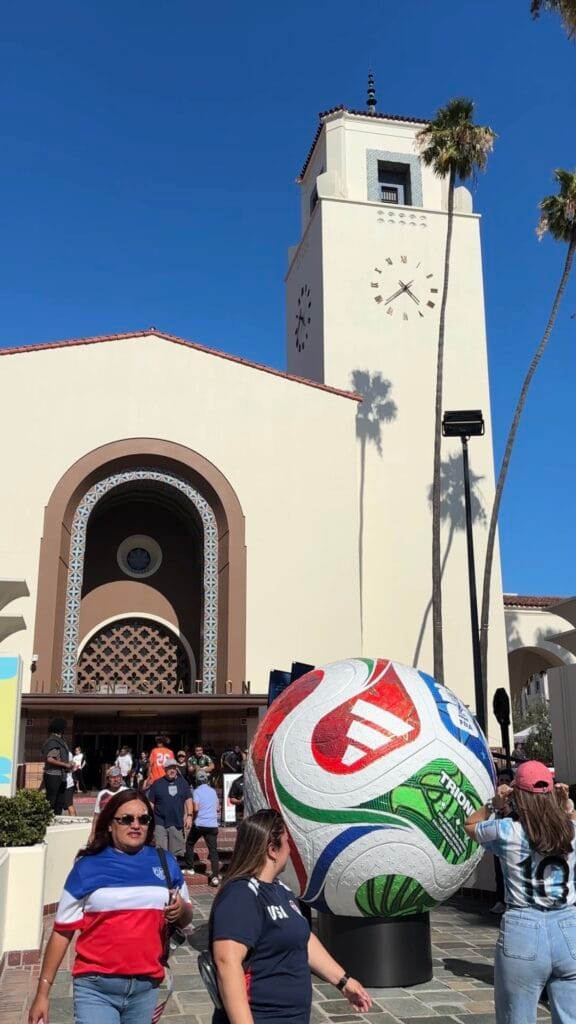
The demand for transit during the World Cup remained high throughout the month.
Earlier in the tournament, shuttle service to SoFi Stadium saw significant traffic.
When the United States played Paraguay, the shuttle service saw 18,000 rides. That figure rose to 26,000 for the match between Iran and New Zealand, Metro officials announced a few weeks ago.
The final match to be played in Los Angeles took place last Friday when Spain defeated Belgium in the quarter-finals.
The performance of the LA Metro system during the World Cup is widely regarded as a test run for the 2028 Summer Olympics, with almost all of the international competitions (aside from softball and canoe slalom) taking place within the Los Angeles metropolitan area.
LA Metro will learn a lot from the World Cup and how well the system performs under the increased demand, although transit officials acknowledge maintaining this level of ridership will be a challenge moving forward once the city settles down into its normal rhythm.
Still, there is a lot to feel encouraged about regarding these figures, particularly as it related to the new D Line stations. May’s ridership figures were the highest they’ve been since before the onset of the coronavirus pandemic, and Metro officials attributed that mostly to the three new D Line stations that opened in the western portion of L.A. in some of the densest and economically important parts of the city where traffic and parking can be a nightmare.
Ridership numbers will likely climb even higher when the D Line extends further west in the coming years.
Construction remains active on two additional segments of the line into Beverly Hills at Beverly Drive and Century City, followed by two new stops in Westwood at UCLA and the VA Hospital. Both of those segments were most recently targeting a 2027 completion date, but the third segment in Westwood could potentially be pushed to 2028.
When fully built out, the D Line Subway Extension Project will add nine miles of underground tracks with four (seven counting the three that opened in May) new stations along its route from downtown Los Angeles to the Westside.
For more stories like this, follow Rabble News on Instagram and Facebook.
