
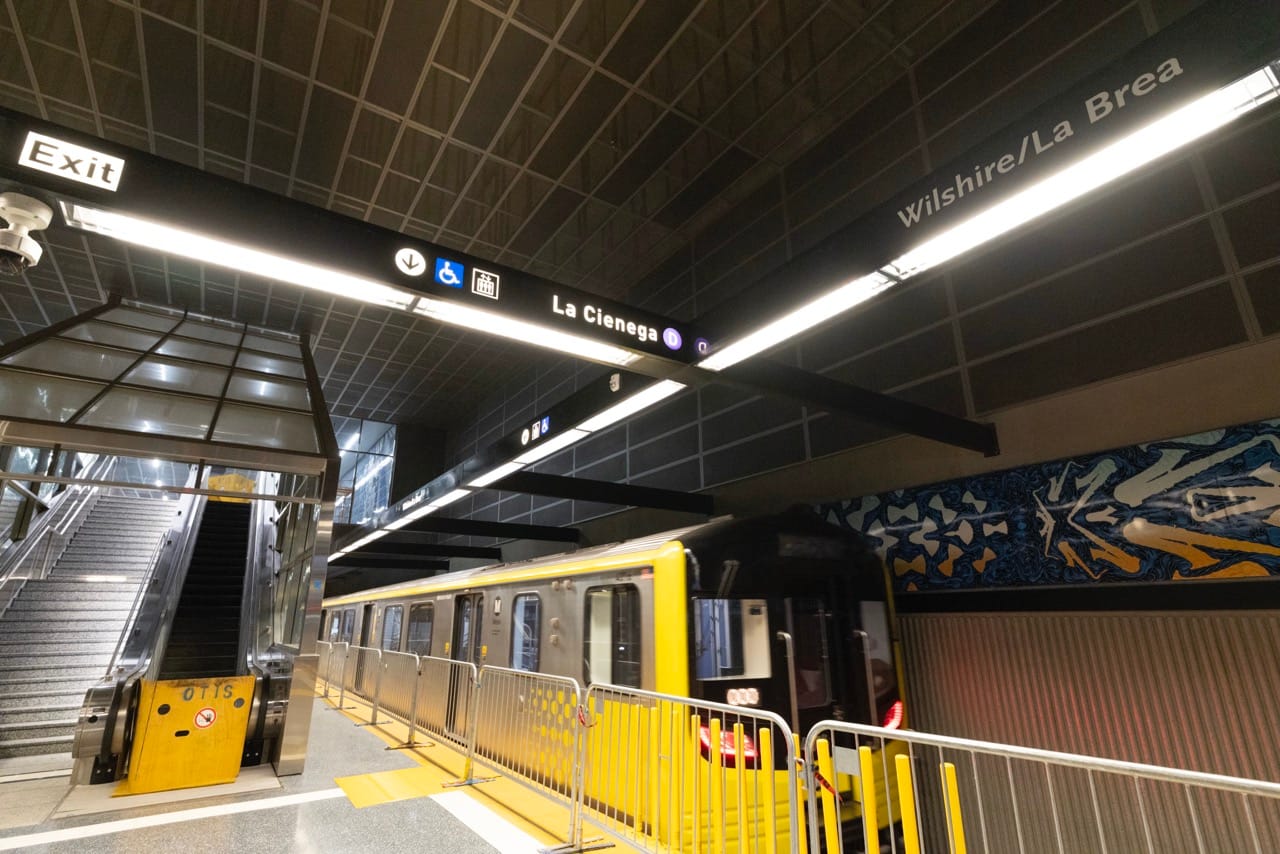

The latest expansion of the LA Metro system is already proving to be a welcome addition for travelers.
On Tuesday, LA Metro officials announced that the extension of the D Line underground subway helped drive May ridership to its highest level in over six years.
Metro officials say it’s the highest ridership month since the onset of the coronavirus pandemic.
The D Line itself saw a 62% increase in ridership compared to the previous May. Overall rail ridership rose 9.5% compared to May 2025, with more than 6.47 million trips across the Metro rail system during the month.
The first portion of the D Line extension opened on May 8, adding more than three miles of underground tracks in the Western portion of Los Angeles, and opening three new stations along Wilshire Boulevard at La Brea, Fairfax, and La Cienega.
Metro officials said the new stations saw between 8,000 to 10,000 new daily riders since opening.
The most stark increase was noted on weekends, in which D Line ridership grew nearly 80% year-over-year.
Much of the increase ridership numbers can be attributed to the fanfare and excitement about the first underground heavy rail expansion in L.A. in decades, with several celebrations hosted along the D Line route and fares waived the days following the grand opening.
The increased ridership on the D Line appears to have had a downstream effect, increasing the total riders on all of LA Metro’s other rail lines by at least 8% on weekdays and 18% on weekends.
Read More: LA Metro restocks viral ‘Ride the D’ t-shirt alongside new themed apparel
The A Line notched an 11.3% increase in riders in May, the B Line increased 7%, the E Line rose by 4% and K Line ridership soared by 48% with weekend ridership climbing by more than 60%—the K Line is one of the light rail lines that stands to benefit the most from the D Line extension as the two lines will eventually connect at the Wilshire/Fairfax station.
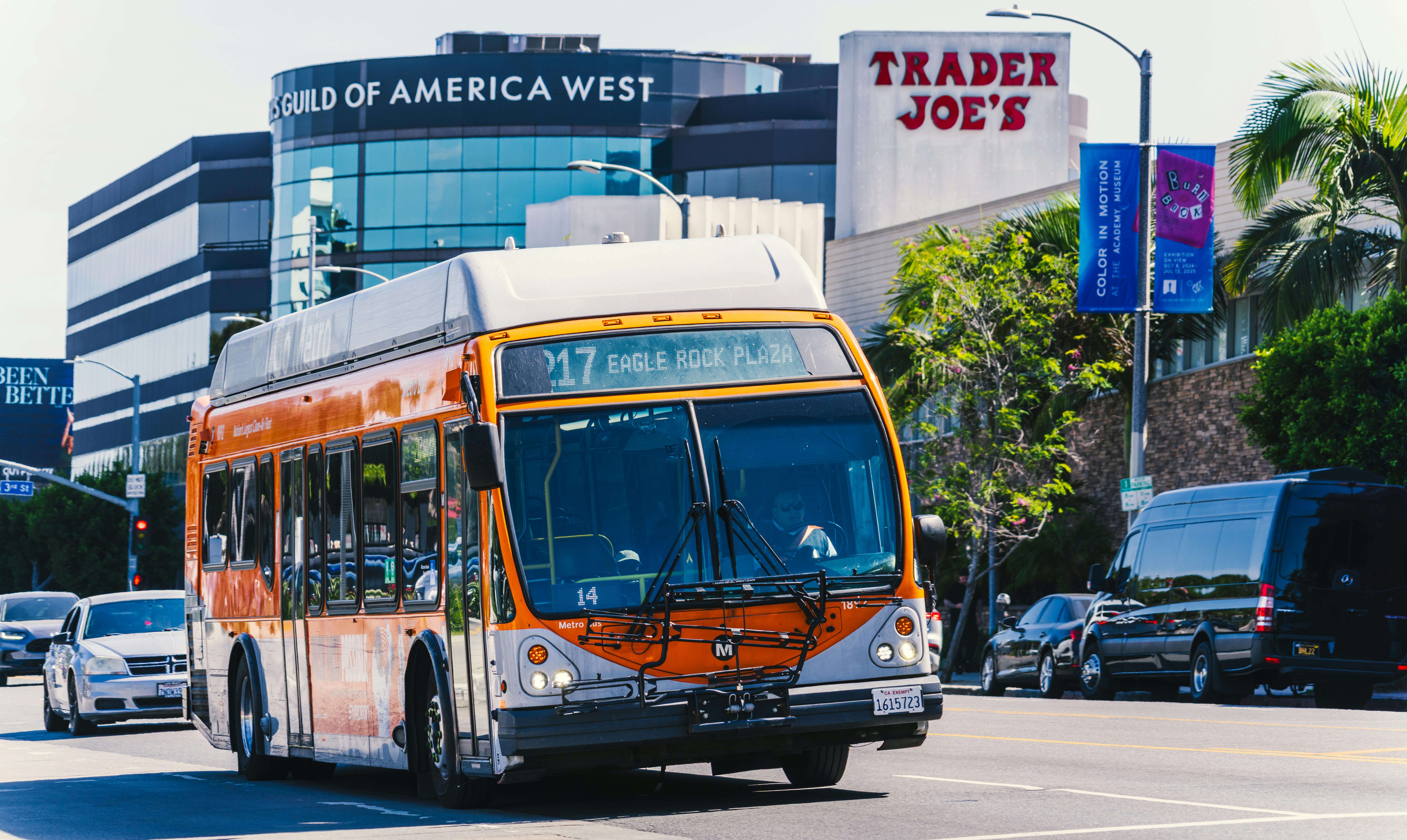
Bus ridership did dip slightly in May compared to the previous year, but Metro officials said that can likely be attributed to people opting to take rail instead. The Metro bus system continues to be the “backbone” of the service network, officials said.
The ridership numbers are highly encouraging as LA Metro expands into some of the culture and economic epicenters of the city where parking can be sparse and traffic can be nightmarish. And those numbers will likely climb even higher when the D Line extends further west.
When fully built out, the D Line Subway Extension Project will add nine miles of underground tracks with four (seven counting the three that opened last month) new stations along its route from downtown Los Angeles to the Westside.
Construction remains active on two additional segments of the line from the current western endpoint at La Cienega deeper into Beverly Hills at Beverly Drive and Century City, followed by two new stops in Westwood at UCLA and the VA Hospital. Both of those segments were most recently targeting a 2027 completion date, but the third segment in Westwood could potentially be pushed to 2028.
LA Metro hopes that May’s ridership increase isn’t a flash in the pan. Once excitement eventually fades about the new stations, we’ll have to pay close attention to where the numbers fall. But, before you know it, more stations should open and the cycle could restart all over again.
In the meantime, there’s a major international event taking place in the city in which LA Metro is heavily involved.
Are people taking LA Metro to the World Cup?
Visitors to Los Angeles appear to be making good use of the LA Metro during the FIFA World Cup.
Games are being played at SoFi Stadium in Inglewood (arbitrarily named Los Angeles Stadium for the duration of the games), and LA Metro officials said things are off to a “very strong start.”
LA Metro and regional transit partners have set up a special shuttle service for SoFi Stadium to take spectators to and from the matches. Through the first two matches at Los Angeles Stadium, roughly 45,000 rides have been taken on this service.
Read More: Trump Administration unveils gold-plated redesign of historic Penn Station
The first match at SoFi between the USA and Paraguay saw more than 18,000 rides on the special shuttle service. When Iran and New Zealand squared off on Monday, that number jumped to more than 26,000.
- (I would imagine fewer USA fans are utilizing the public transit offerings for myriad reasons.)
Los Angeles will ultimately host eight World Cup games in total when everything is said and done. The World Cup shuttle service will remain available for the remaining six matches. LA Metro is also helping visitors and Angelenos connect to local World Cup fan zones.
The performance of the Metro system during the World Cup is seen as the audition and dry run for the 2028 Summer Olympics, in which nearly all sports (aside from a couple scattered across Southern California and Oklahoma) will be located in the Los Angeles metro area.
Read More: LA Metro to operate water taxi service during 2028 Olympics
LA Metro should, theoretically, learn a lot from the World Cup and how well the system performs under the increased demand.
For more information about the World Cup service, click here.
For more stories like this, follow Rabble News on Instagram and Facebook.
