


A residential cruise startup is marketing a permanent lifestyle at sea that it says will allow passengers to live full-time with their dogs and cats.
Denver-based Fabled Voyages is encouraging prospective residents to secure introductory pricing for what it calls an “all-inclusive residential cruise ship” that removes a traditional barrier to long-term travel (or nomadic pirate lifestyle.)
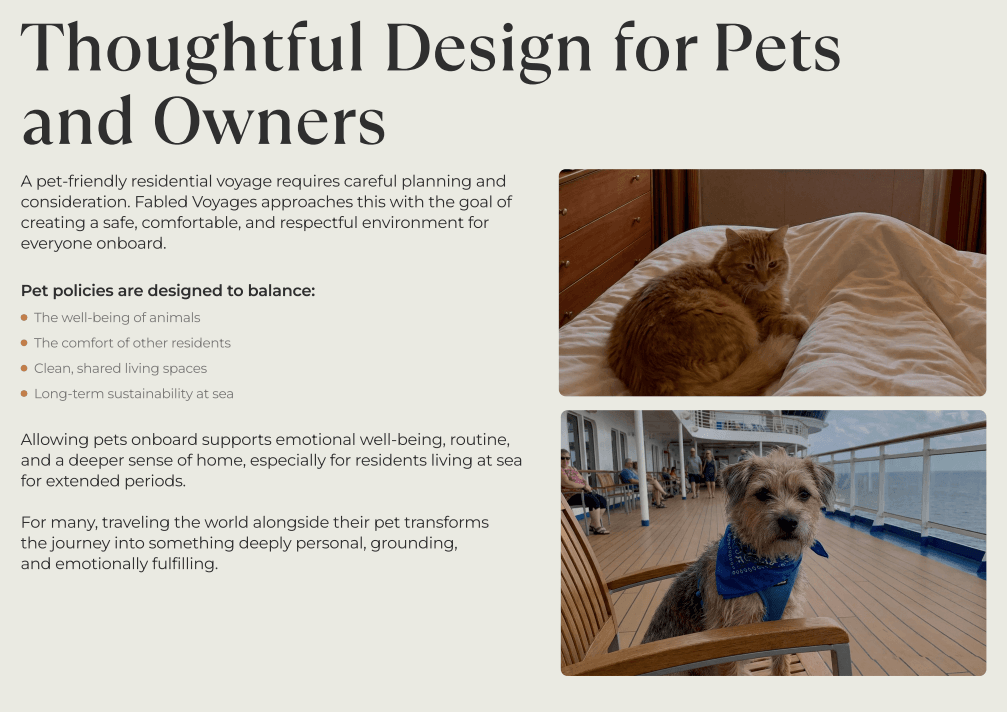
The company is seeking deposits for a planned ship, marketing to retirees, remote workers and long-stay travelers with a program that allows up to two pets per residence.
To accommodate these animals, Fabled Voyages says it is developing dedicated open-air walking areas, pet-friendly zones, onboard grooming services and access to veterinary care. The company says the goal is to create a community where families can experience the world together without leaving their animals behind.
“So many have reached out to and said they wouldn’t consider living aboard if it meant leaving their pets behind,” said Madison Miller, founder and chief executive of Fabled Voyages. “We’re building a community where families including the four-legged family members can experience the world together.”
Read More: 2027 cruises built around total solar eclipse, Cannes Film Festival
According to company officials, the program applies to small-to-medium dogs and cats, provided they meet certain size, behavior and health requirements. It’s a notable shift in the cruise industry, as animals are typically prohibited unless they are designated for service roles.
What is a residential cruise or residence at sea?
This week’s push for reservations comes as the startup attempts to secure early financial commitments before needing future pricing adjustments.
Fabled Voyages began accepting deposits ranging from $5,000 to more than $11,000 in late March. Interested residents can choose between term-based ownership or long-term rentals, with marketing materials suggesting buyers can “make the ocean your neighborhood.”
According to the company website, a five-year ownership term for an interior cabin starts around $100,000, while a veranda cabin for the same duration costs upward of $235,000.
Longer ownership terms of 10 and 15 years are also planned, alongside lifetime options. Beyond the initial purchase, residents face monthly dual-occupancy fees ranging from $8,000 to $9,100. For those seeking less permanence, monthly rentals are advertised starting at $7,500 for solo travelers, with annual rentals priced around $88,000.
“Many of our future residents have spent years dreaming about traveling the world without constantly packing, unpacking or worrying about maintaining a traditional home,” Miller said in a press release.
The company’s website includes a comparison table of its planned operation and more established residential cruise lines, such as Villa Vie Residences and The World.
Read More: Would you ditch your life on land to retire early at sea?
Fabled Voyages claims its planned vessel will range between 70,000 and 120,000 gross tons with a capacity to house 1,000 to 2,400 residents across 900 to 1,200 cabins. By comparison, Villa Vie Residences operates a 24,344-ton ship; Villa Vie also permits cats in limited numbers but prohibits dogs, according to the comparison chart on the Fabled Voyages website.
While the company promises an experience featuring dining, wellness programs and global itineraries spanning Europe, Asia and the Americas, concrete details about the operation remain limited. The company has sparse details regarding the exact cruise ship type, physical floor plans or photographs of what the cabins will look like. Much of the promotional imagery on the company website appears to be AI-generated or stock photography.
Whether the startup can successfully transition its digital concepts into a physical, residential vessel remains to be seen, but the promise of bringing a beloved pet onboard to share your new life at sea is a compelling one.
In the meantime, company officials are urging those interested to review available options on its website before introductory prices are changed.
