
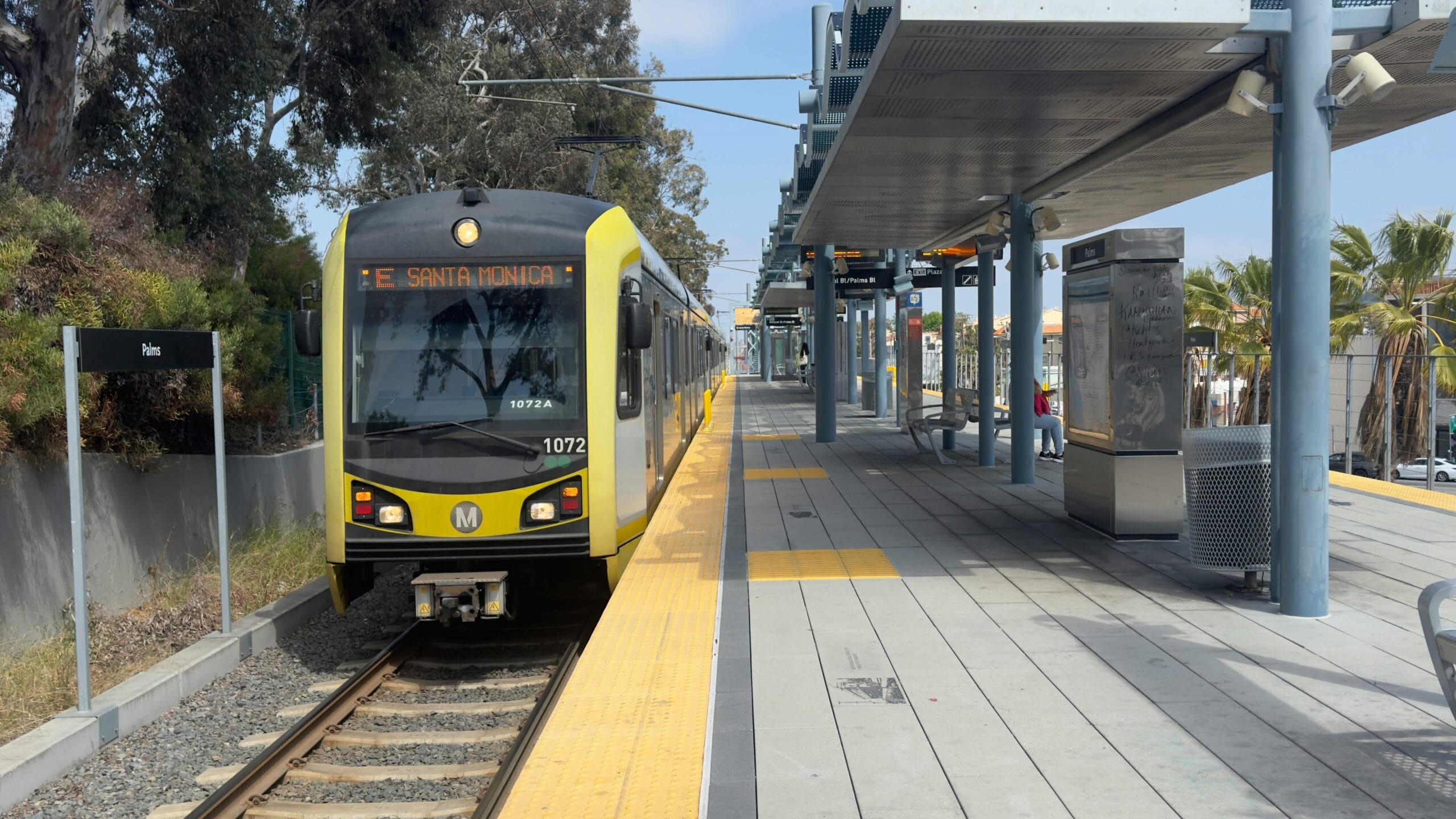

With gas prices climbing to near historic levels across the United States, public transportation agencies have been on an all-out media blitz to convince drivers to park their cars and take local buses and trains.
In Los Angeles, LA Metro has been heavily pushing the cost-benefit of taking public transit over driving, boasting the cost of a single ride versus the high price of filling up at the gas station.
“Stop spending $100 to fill up when you can ride Metro for $1.75,” one social media caption reads alongside a highlight reel of LA Metro buses and trains in action.
The post is one of a handful LA Metro has published in recent weeks as Americans continue to feel the pain at the pump, driven largely by the U.S. war with Iran which began near the end of February.
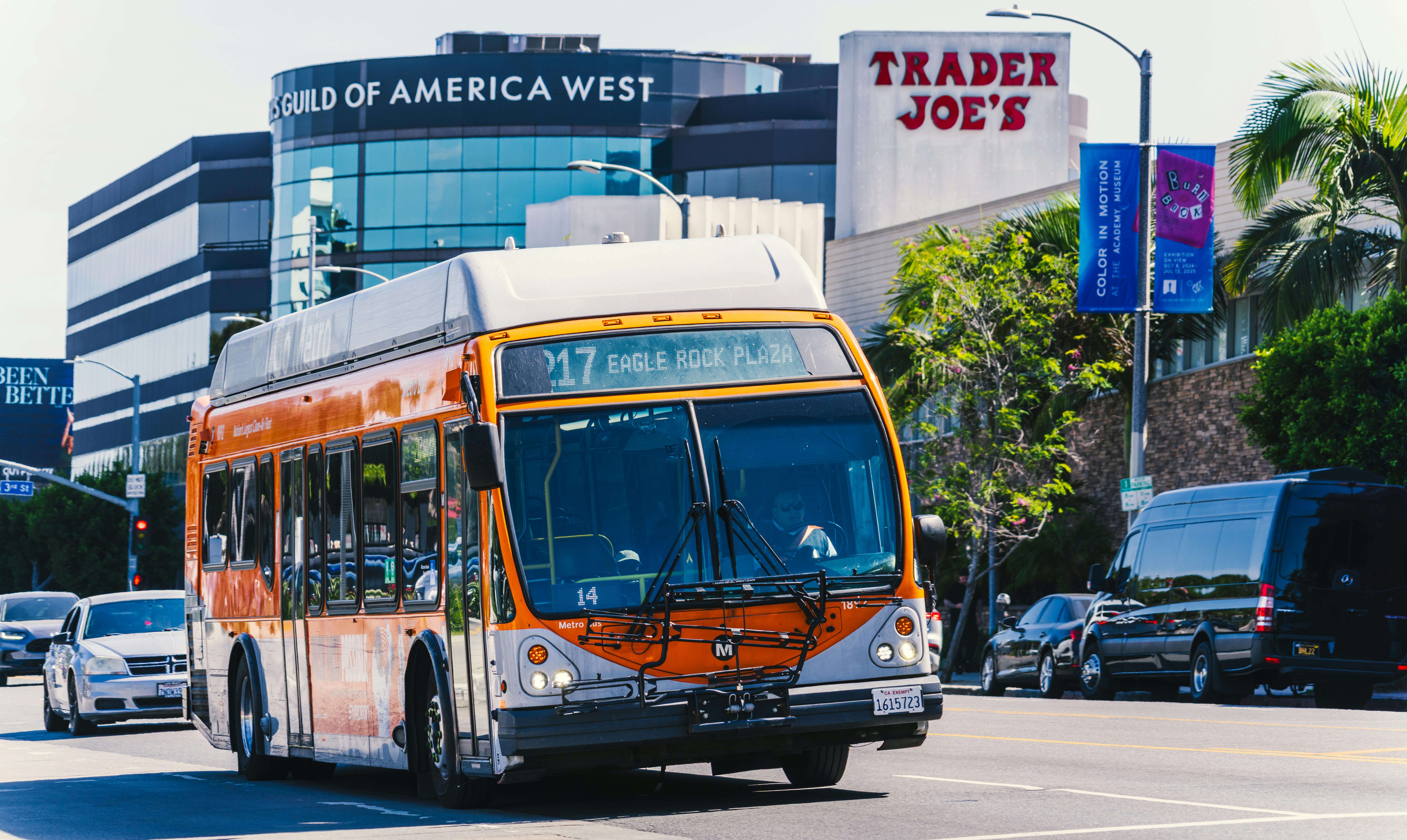
So, are people actually heeding the advice of LA Metro and other public transportation agencies and leaving their cars at home?
LA Metro officials say the answer isn’t fully clear, and only March ridership data is currently available for analysis. But March has signaled an “important shift,” an LA Metro spokesperson said.
“We saw an 8.6% increase in weekday ridership compared to March 2024, suggesting that more people may be returning to rail for regular, work-related travel—not just occasional trips,” that spokesperson said in an email with Rabble News.
March figures follow a trend of three straight months of year-over-year ridership growth across LA Metro’s rail system.
Are gas prices leading to more public transit use?
In short: It’s hard to say.
The three-month growth period in early 2026 is largely impacted by the rise of weekend riders who are utilizing the system for leisure trips in order to avoid traffic and the headache of parking, Metro officials said.
Additionally, LA Metro has seen big ridership boosts in recent months for other high-profile reasons, including the completed northern expansion on the A Line, and the long-awaited connection between the C and K lines at the LAX/Metro Transit Center.
It’s possible that increased connectivity and convenience are the sole reasons for the positive trend.
But LA Metro officials weren’t ready to completely write off gas prices as a driver of increased ridership in March.
Read More: LA Metro searching for water taxi operator during 2028 Olympics
While hesitant to “draw definitive conclusions from a single month,” the rising cost of driving, Metro officials said, appears to be a “chief factor as well.”
“With gas prices averaging about $5.50 per gallon, the ability to travel across the county for just $1.75 makes rail an increasingly attractive and cost-effective alternative,” a spokesperson for LA Metro said. “This growing price gap, combined with the reliability and convenience of the system, appears to be encouraging more riders to choose transit for both leisure and daily commutes.”
It’s important to note that the $1.75 figure comes from a single ride, so the actual price of using LA Metro on the daily would likely be more—although the system is capped at $5 per day.
March and April ridership numbers, when April figures are released mid-May, will be the true litmus test for whether or not typical drivers are adopting LA Metro to avoid the rising cost of gas.
But that two-month window will be the only real opportunity to evaluate whether gas prices are having an effect.
After that, things will get significantly more murky.
Beginning next month, significant changes, including another major expansion, will make it harder to say for sure why more people are riding.
Read More: LA Metro restocks viral ‘Ride the D’ t-shirt alongside new themed apparel
On May 8, the LA Metro D Line, one of the system’s two underground subways, will extend further into West L.A. with the opening of three new stations along Wilshire Boulevard at La Brea, Fairfax and La Cienega.
LA Metro officials believe that the opening of those stations in heavily populated areas of the city will only amplify current ridership trends.
After that, beginning in June, Los Angeles will host several matches as part of the 2026 FIFA World Cup, and the LA Metro system will likely face its toughest test in years with international travelers descending upon the region.
In the meantime, LA Metro is optimistic that its value-centric messaging has proven effective as consumers continue to pay hand over fist at the pump.
But despite its own encouraging ridership figures that coincide with the war in Iran and its global impact on oil prices, another California transit agency is pumping the brakes on the theory that people are changing their habits due to the price of gas.
BART ridership figures tell a different story
Like LA Metro, Bay Area Rapid Transit has seen steady increases in its ridership figures along its 130-mile service area.
Officials tell Rabble News that BART has experienced a six-month period of steady growth in the 10-13% range when compared to the previous year. That increase, according to BART, is “not too different than what we’re seeing now” in March and April.
“While we acknowledge that gas prices theoretically impact transit ridership, the current ridership data do not show a correlation with the recent rising gas prices,” a BART official said in an email to Rabble News. “We would need to see a sustained increase in ridership to attribute any increase to gas prices.”
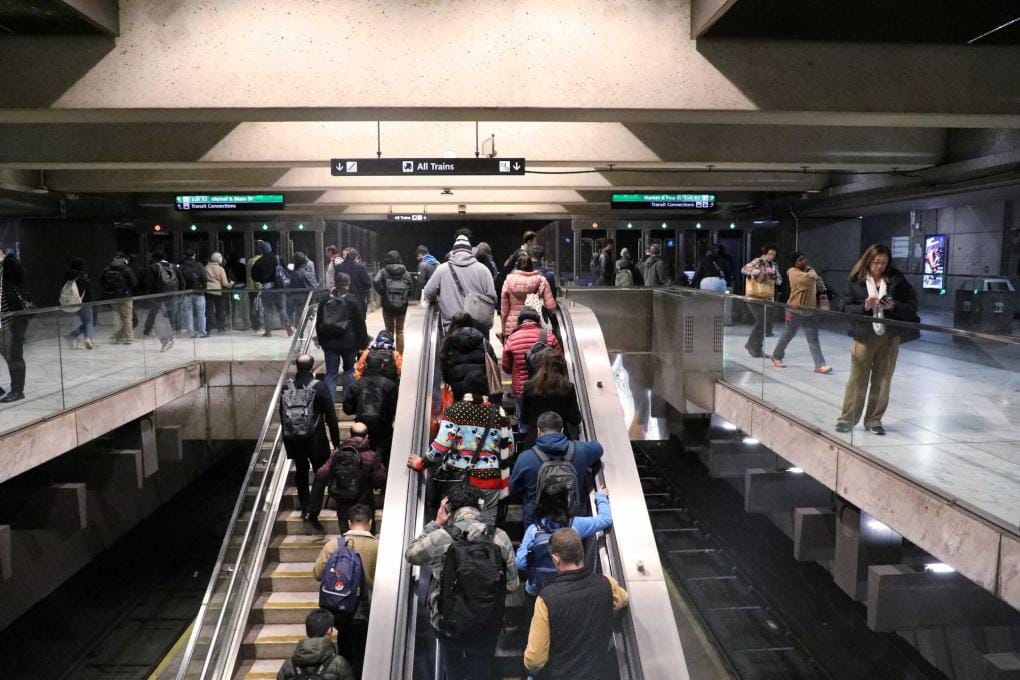
Unlike LA Metro, BART releases its ridership totals on the daily, and more than half of April’s data is already available to analyze.
If BART officials aren’t seeing anything of note, it might only be wishful thinking for other transit agencies.
Read More: Amtrak adding another train along busy Southern California corridor
While BART has promoted its service as an alternative to paying high gas prices, LA Metro has been a bit more aggressive with that messaging.
Is it working? It’s perhaps impossible to know for certain. But with the known environmental impact of vehicle use, it’s a message worth repeating—especially on Earth Day.

2 Comments
Pingback: Spirit Airlines: Trump Administration poised to bail out embattled carrier
Pingback: LA Metro project in crucial corridor gets $150M boost by DOT