
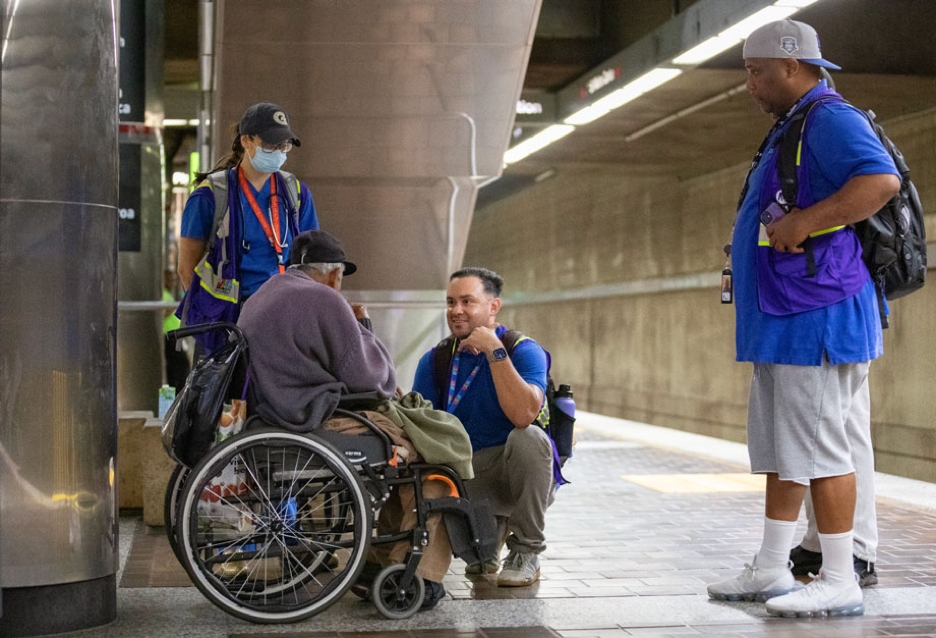

A newly released point-in-time count on the LA Metro has revealed a dip of people experiencing homelessness across the public transit system for the second consecutive year.
According to a new report from the Los Angeles County Metropolitan Transportation Authority, the number of unhoused individuals on the Metro system was estimated to be between 395 and 517—that’s down from the 2025 county which found between 631 to 684.
It’s a 31% decrease from the previous year, and a 57% decrease from 2024 when the count was over 1,000, officials said.
The LA Metro count was part of the Greater Los Angeles Homeless County, which is conducted every year by the Los Angeles Homeless Services Authority, and was held this year from Jan. 20-22.
The Metro-specific count was held on Jan. 20, in which 62 volunteers conducted outreach throughout rail and bus system throughout at stations, rights-of-way and parking lots. Volunteers included outreach workers, Metro employees and frequent riders, who conducted the count in the same fashion as LAHSA and whom followed the standards set by the U.S. Department of Housing and Urban Development.
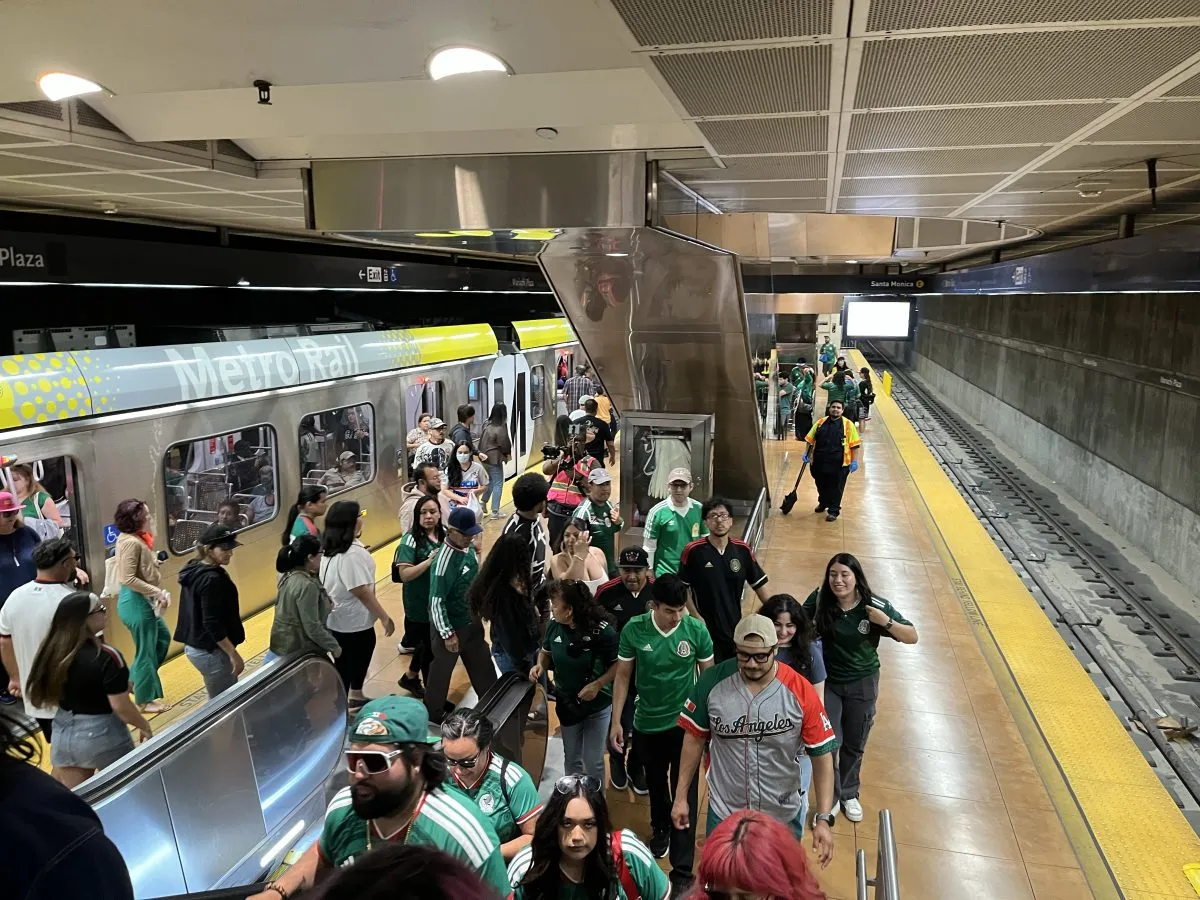
Metro officials say that this particular count was not included in LAHSA’s published regional point-in-time count. They also note that the results of the count aren’t an “exact census,” and it utilizes a range of figure to account for any “statistical margins of error.”
Read More: LA Metro’s major extension is already breaking records
Los Angeles Mayor Karen Bass, who has made the homelessness crisis a tentpole of her administration (to mixed results) said the results of the LA Metro homeless count shows that the methods put into place under her leadership are paying off.
“During and after the COVID-19 pandemic, many more unhoused people began to populate our Metro system,” said Bass, who is also the current Chair of the LA Metro Board. “Under the leadership of CEO Stephanie Wiggins and the Metro Board during my first term as Chair, we combined compassionate outreach with enhanced public safety strategies to get people housed with the services they need. These results prove that our approach is working and these efforts must continue.”
How is LA Metro addressing the homeless population?
Metro credits the decrease in unhoused individuals across the LA Metro system to its “integrated public safety model,” which it says combines combines “care-based services” with coordinate law enforcement and security to improve safety and connect those on the street with supportive services.
LA Metro public safety department launched a care-based services division in January, which it says brought its neon green Metro Ambassadors and its homeless outreach and community intervention specialists under the same public safety umbrella.
“Creating the Care-Based Services Division reinforced our belief that public safety is strongest when care-based services and enforcement work together,” CEO Wiggins said. “These results show that our model is making a real difference—for people experiencing homelessness and for the tens of thousands of customers who rely on Metro every day.”
Read More: LA Metro will pay you $600 to keep your car parked for 5 weeks
While highlighting its evolving public engagement efforts and collaboration with local organizations, LA Metro has made some significant infrastructure changes that could also contribute to the decrease in visible homelessness across the system, which many might consider to be not as gentle or care-based.
Among them, more than two-dozen rail stations have received upgraded, taller faregates that aren’t as easily circumvented. These beefier fare gates are meant to cut down on fare evasion, which is often associated with unhoused individuals.
Taller fare gates have resulted in massive increases in revenue collection and valid fares, Metro themselves say.
Efforts to curb fare evasion have also included instituting tap-to-exit systems at many of the busiests stations in the county, including end-of-line stations at Los Angeles Union Station, North Hollywood, and Downtown Santa Monica, as well as newer stations like Pomona North on the A Line and the LAX/Metro Transit Center.
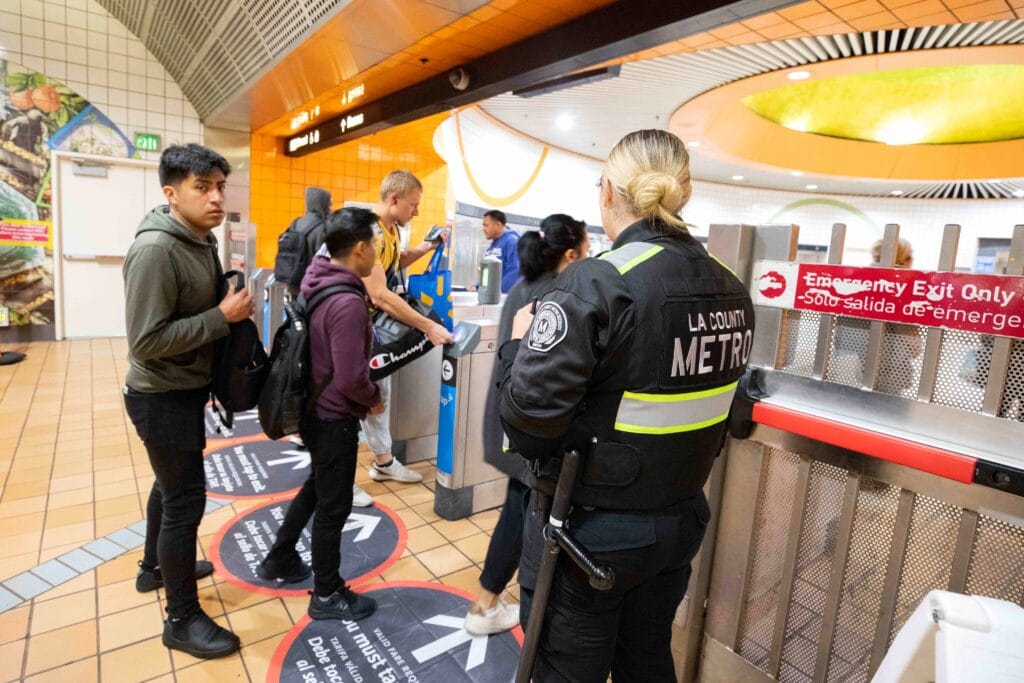
The tap-to-exit system has been directly credited with a significant decrease in reports of crime and other quality-of-life disturbances on LA Metro lines where it has been implemented.
Riders have also reported an increased frequency of fare checks from uniformed law enforcement officers contracted with the transit agency.
Now all that’s not to say that unhoused individuals were necessarily committing crimes on trains, but rather stricter fare enforcement has likely kept many of those experiencing homelessness out of the system entirely and therefore not included in January’s point-in-time count.
That’s just my personal speculation.
The real test regarding the number of unhoused individuals on the LA Metro system could be revealed in the coming years if Bass’s ambitious plans and reelection efforts are successful.
Bass, who has taken on her second stint at Chair of the Metro Board and is in a tightly contested race against Councilmember Nithya Raman to keep her seat in the Mayor’s Office, has already announced her plans to make LA Metro entirely fare-free.
Currently, each trip on an LA Metro train or bus costs around $1.75, but the price is capped to a maximum of $5 per day or $18 per week. There are also several programs that exist to provide free or deeper discounted rides to those who qualify.
Read More: LA Metro begins hiring blitz for in-house police force
If Bass secures a second term as Los Angeles Mayor, has her way in instituting fare-free Metro, and removes or changes the infrastructure upgrades put in place over the last two years, then we will have significantly more information to determine how much credit for the decrease in homelessness goes toward stricter fare enforcement or these highly touted care-based services.
From my experience, free fares across the LA Metro system is more popular as an abstract policy idea than it is to frequent riders who depend on the system. If you peruse the LA Metro subreddit or transit groups online, the overall sentiment seems to steer toward cheap, affordable fares with programs for those who can’t afford it, but consistent fare enforcement for those who can in order to fund future improvements.
Bass, who is admittedly not a regular Metro user herself, could potentially receive pushback on those fare-free plans from either of the two new members of the LA Metro Board who will actually be regular and frequent public transit users—one of whom Bass will get to appoint herself.
Back to the topic of LA Metro’s homelessness count, the results are undeniably encouraging, and officials concede that there is “more work to be done.”
“We believe these results show meaningful progress in helping people transition to stable housing while making Metro cleaner, safer and more welcoming for everyone,” LA Metro officials stated.
For the complete report, click here.
For more stories like this, follow Rabble News on Instagram and Facebook.
