
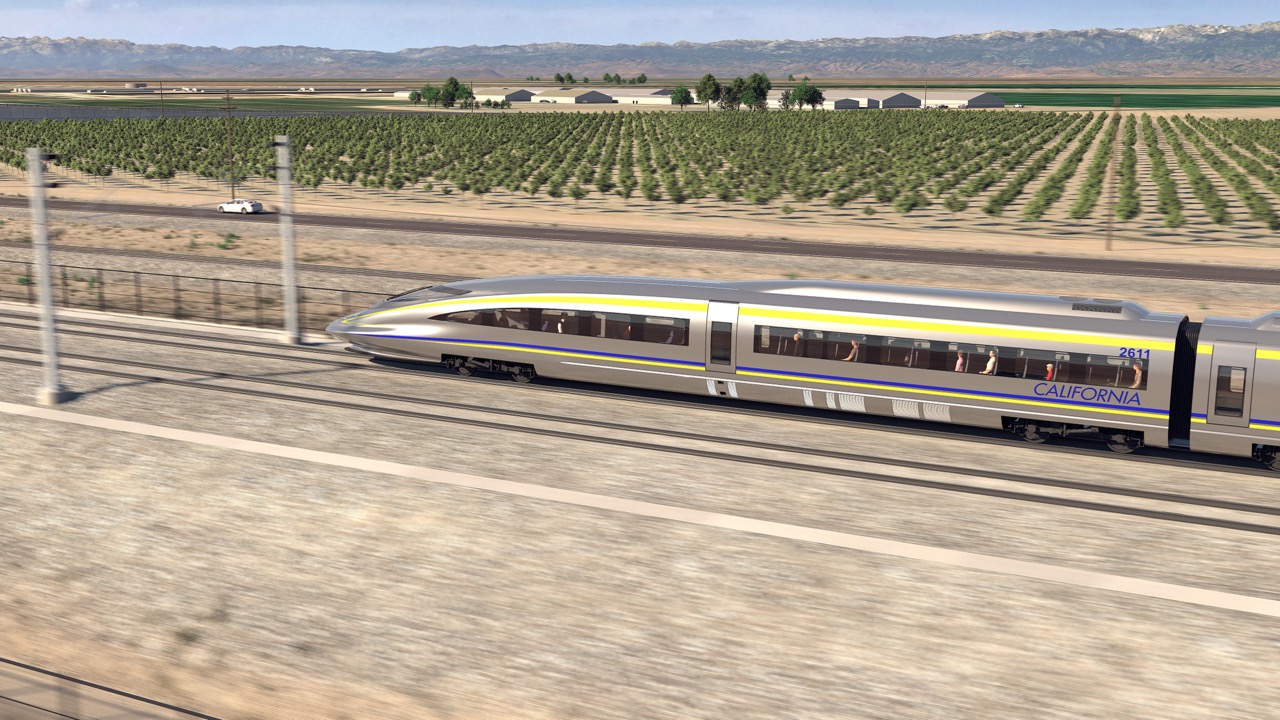

The California High-Speed Rail Authority has made another major move to fast-track the project and connect the Bay Area with the Los Angeles basin by bullet train.
On Wednesday, the Authority announced it had signed a six-month planning partnership, officially called a “co-development agreement,” with Momentum Alliance Partners, an international consortium that includes major transit, engineering, and finance firms from Canada, France, and the United States.
The goal is to map out a public-private partnership—a setup where private companies chip in upfront cash and technical expertise to help build public infrastructure in exchange for a slice of future revenue.
Public-private partnerships have been the focus of the Authority and its CEO, Ian Choudri, who has made a concerted effort to “reposition” the project around a strategy of commercial viability and accelerated delivery.
This agreement reflects growing market confidence in that strategy and the long-term potential of California high-speed rail as a transformative investment in California’s future. As construction advances and we prepare to begin high-speed rail track installation this year, partnerships like this allow us to evaluate how private-sector expertise, financing and delivery models could help accelerate system expansion.”
California High-Speed Rail Authority CEO Ian Choudri
According to a news release from the California High-Speed Rail Authority, Momentum Allegiance Partners is made up of experts in rail operations, engineering, systems integration and the all-important commercial development industry.
The partnership will allow the Authority and Momentum to explore “asset commercialization,” a strategy to generate extra income by using the rail line’s land for various side ventures. Under the plan, potential additional revenue sources include the state leasing space along the tracks for high-speed fiber-optic internet cables and clean energy power lines, or developing housing and retail shops directly around the train stations.
The idea for this co-development agreement is that this outside additional funding will reduce the project’s heavy reliance on taxpayer money.
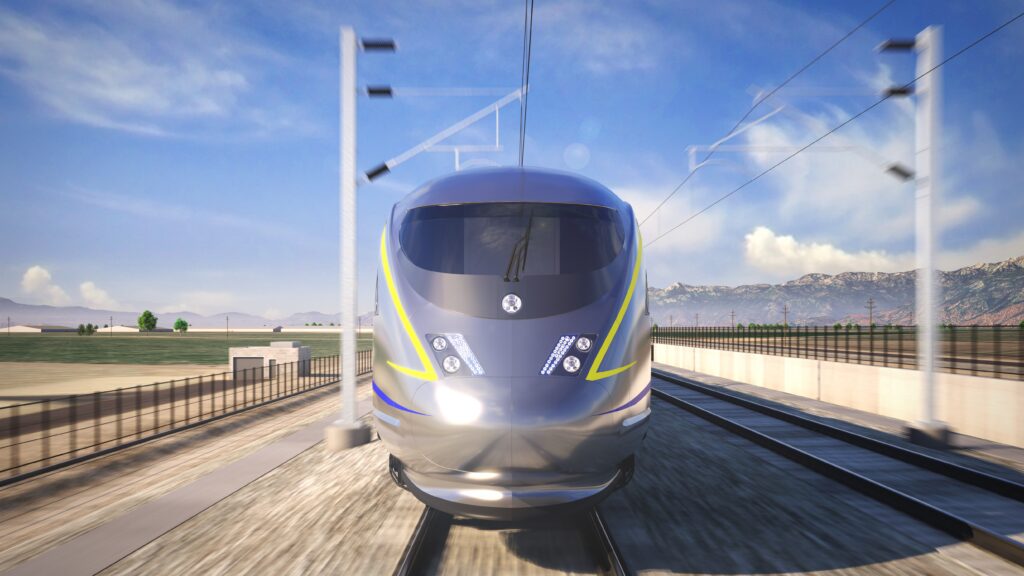
State officials hope private dollars will help fund the expensive and labor-intensive parts of the project that include mountain crossings and urban tunnels which will be needed to expand beyond the Central Valley.
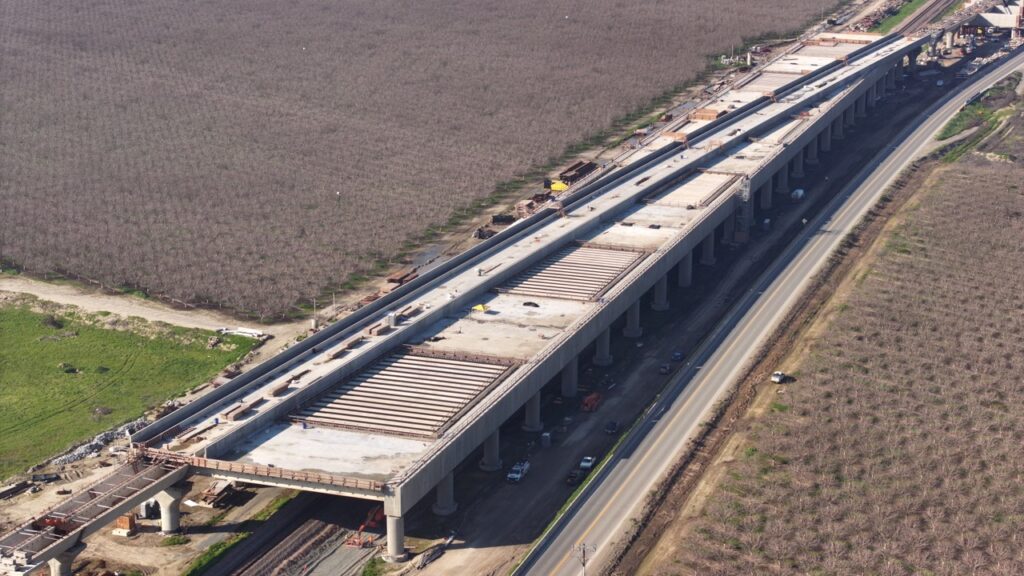
Currently, crews are building 171 miles of the high-speed network in the Central Valley between Merced and Bakersfield, with actual track laying expected to start later this year.
Read More: Amtrak’s high-speed trains have already logged 1 million riders
While the full 494-mile system linking Northern and Southern California is still short of the cash needed for full completion, 463 miles between San Francisco and Los Angeles have already cleared the state’s rigorous environmental reviews.
That leaves the vast majority of the statewide route legally approved and “shovel-ready” as soon as this new wave of private or public funding is secured.
But extending from the Central Valley into the state’s big population centers is the largest challenge for construction crews yet, as it requires massive tunneling throughout mountainous terrain.
When will the California High-Speed Rail be completed?
An exact completion date for the California bullet train remains murky. State officials have previously identified the early 2030s as the planned operation date for the initial operating segment within the Central Valley.
But under Choudri’s stewardship, timelines have been regularly shifting and the original taxpayer-only funding model has mutated and transformed into more of a public-private partnership like the Authority’s CEO has envisioned.
Earlier this month in his CEO report, Choudri said the project was finally at its turning point and described June 2026 as “one of the most consequential months in the history of the California High-Speed Rail program.”
In the coming months, active construction will expand beyond the 119-mile segment in the Central Valley with extensions toward Merced and Bakersfield. That will allow the High-Speed Rail to connect more easily with regional transportation networks near the Bay Area and Southern California to allow for some form of service to begin on an accelerated timeline before the entire Phase 1 of the project is completed.
In addition to laying track, expanding the current construction footprint, and eventually boring through the mountainous segments along the high-speed rail corridor, additional work is being done in the background.
Currently, the Authority is awaiting final proposals from major rail manufacturers Siemens and Alstom, which are each bidding for the lucrative contract to build, deliver and service the 220 mph trainsets that will be utilized on the California High-Speed Rail network.
Both train manufacturers have long histories of building in California, with Alstom owning a facility located on Mare Island in Solano County, and Siemen’s having its U.S. headquarters and a massive manufacturing plant near Sacramento.
Whichever manufacturer receives the contract from CAHSR will supply an initial fleet of six trainsets, with the first prototypes slated for testing some time in 2028.
The last remaining portion of Phase 1 that has yet to receive environmental clearance—Los Angeles to Anaheim—could be approved soon. The Authority released its draft environmental report for that section back in December.
Additionally, the Authority has been celebrating the completion of bridges, grade separations and other major projects in the Central Valley, including recent openings in Kings and Madera counties.
The California High-Speed Rail Authority tracks all of its construction progress online at BuildHSR.com, and Californians, transit enthusiasts or government spending watchdogs can visit the site for resources and see what’s currently under construction and what’s next on the agenda.
For more stories like this, follow Rabble News on Instagram and Facebook.
