
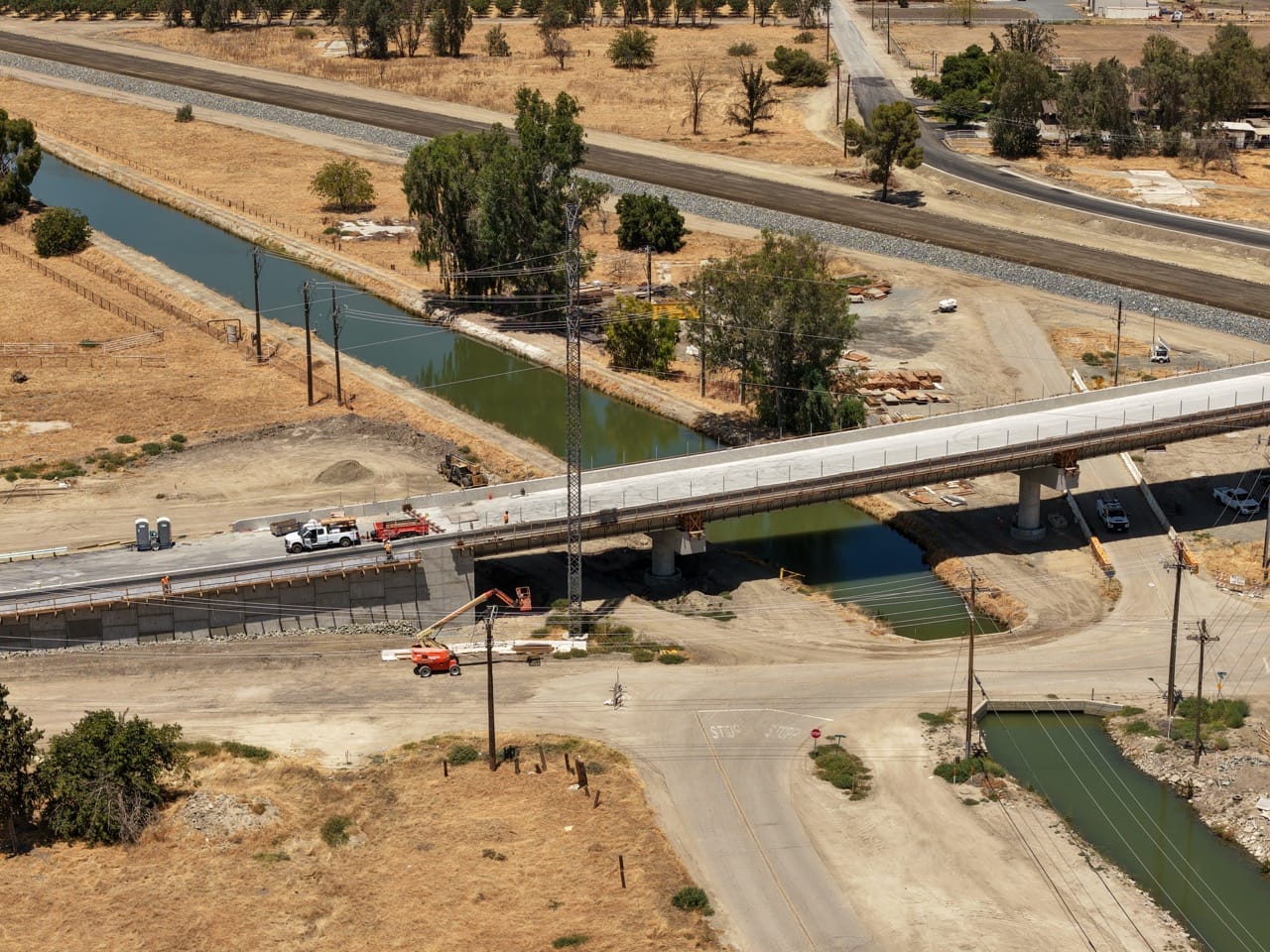

A bill to streamline a confusing and frustrating process related to construction of the California High-Speed Rail has advanced through the state legislature and awaits the signature of Gov. Gavin Newsom.
Senate Bill 1425 gives the California High-Speed Rail Authority clearly defined authority to manage and permit encroachments throughout the project’s rights-of-way, ending a hoop-jumping bureaucratic process that has previously stalled construction.
An encroachment is any type of construction or repair that falls within the carved out space utilized by the California High-Speed Rail. If a city needs to run a water pipe under tracks, or if a cable company needs to string new cables nearby, the current process for obtaining a permit falls in a bit of a gray area, and there’s no clear process to get permission to work.
California law dictates that the Authority is allowed to manage its property but there’s no standardized legal process to handle these types of requests.
This leads to a legal and administrative mess that can sometimes cause construction to be paused while involved parties figure it out.
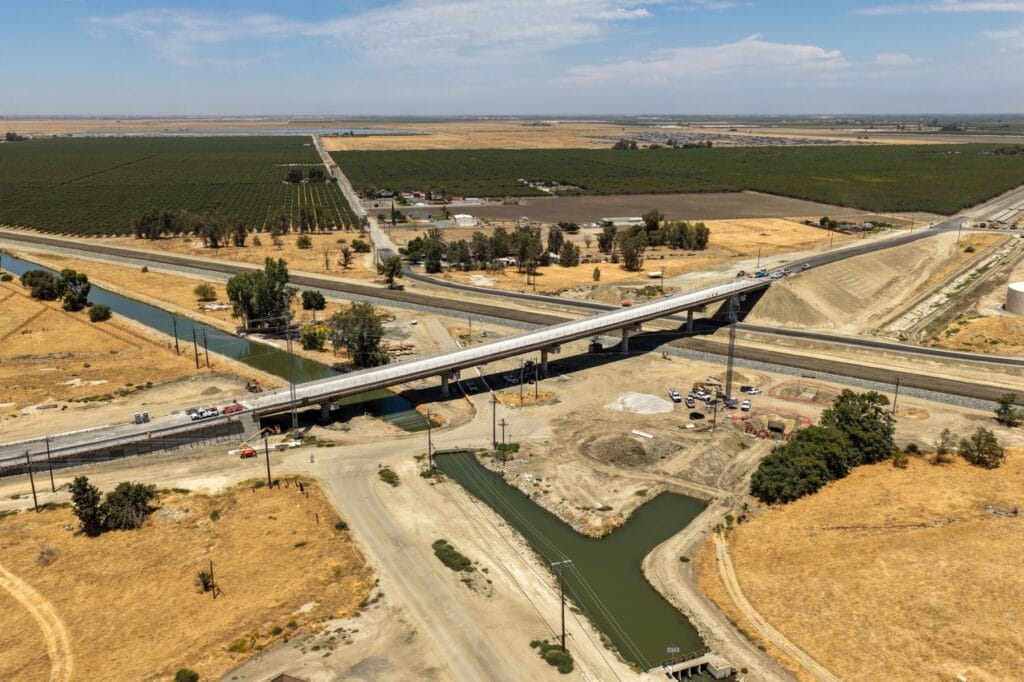
SB 1425 would clear up that bureaucratic headache and give the Authority the authority to simply greenlight any work near its rights-of-way as long as crews follow its instructions.
Read More: Chicago wants to build 15-minute express train from downtown to O’Hare
The bill was authored by State Senator Dave Cortese (D-San Jose), who has been busy this legislative session writing and supporting transit-focused bills.
“High-speed rail is a generational investment, and California has a responsibility to protect that investment by making it easier, not harder, for communities and infrastructure partners to work alongside the project,” Cortese said in a news release. “SB 1425 is about cutting red tape, establishing clear rules where they are needed, and keeping High-Speed Rail moving forward.”
Cortese urged Newsom to sign the bill into law when it arrives. There hasn’t been any indication that he won’t do so.
Robert Pearsall, California Political Director for U.S. High Speed Rail Association, says this bill is a “vital mechanism to streamline the project.”
“With the California High-Speed Rail Authority now executing a co-development agreement with a private consortium to accelerate the project, eliminating unnecessary barriers to completion is critical,” Pearsall said. “By authorizing the Authority to issue encroachment permits, the bill provides third-party access to its right-of-way, accommodates essential utility expansions to serve the public, and unlocks regional development opportunities for local businesses.”
Read More: California High-Speed Rail advances future connection with Brightline West
While the California High-Speed Rail has been oft delayed and its price tag has inflated heavily year-over-year, it’s these sort of behind-the-scenes legal loopholes that regularly contribute to delays. Crews have continued to build structures and complete guideway across the system, but the unprecedented nature of the project has given rise to all sorts of legal hurdles that weren’t necessarily accounted for when voters first approved the initial round of funding for the project all the way back in 2008.
Industry experts will say that the project is most hampered by legal challenges and environmental blockades, rather than a lack of willpower or know-how. Also, uh, money.
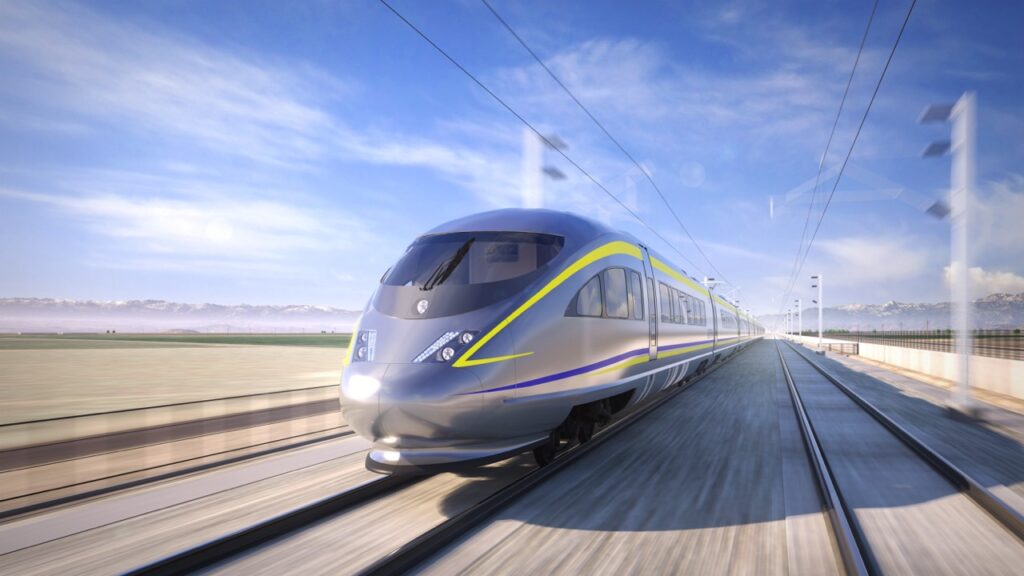
Still, it will take a lot more than SB 1425 and other red-tape-cutting laws to get the project done any time soon. But any bill that makes it easier for the project to progress is a welcome one for the California High-Speed Rail Authority, its stakeholders and the California taxpayer.
As mentioned, Cortese has become something of a champion of California’s ongoing transit projects since becoming chair of the California Senate Transportation Committee.
Earlier this month, another of Cortese’s bills advanced to Newsom’s desk—Senate Bill 1375 would help certain qualifying intermodal rail stations to bypass California’s strict Environmental Quality Act.
Two more of his bills, one which would create a statewide framework for improving the process for building wildlife crossing locations over state roadways, and the other which “demands accountability over autonomous vehicles,” are also awaiting the governor’s signature.
When will the California High-Speed Rail be completed?
An exact (or even abstract) timeline for the project’s completion remains uncertain.
State officials have previously identified the early 2030s as the planned operation date for the initial operating segment within the Central Valley, stretching from Merced to Bakersfield—but that date may have even shifted further down the calendar.
Read More: Transit worker fatigue is national concern as SF train crash makes headlines
In June, the Authority CEO Ian Choudri said the project was at its turning point, and described June 2026 as “one of the most consequential months in the history of the California High-Speed Rail program.”
Does that mean momentum is on the project’s side? Depends on the day of the week.
Regardless, construction of the initial segment remains ongoing. Officials say they plan to lay the very first miles of track and begin electrification and systems installation later this year.
Roughly 90 miles of guideway are finished in the Central Valley, alongside 61 completed major structures. Another 30 structures remain under construction across Madera, Fresno, Kings and Tulare counties.
Nearly all of the proposed 494-mile system between San Francisco and the Los Angeles area have received environmental clearance, with the last remaining portion between L.A. and Anaheim expected to be cleared soon.
The machine keeps running, and SB 1425 is meant to grease the wheels so it can run even faster. But, as with everything involving the California bullet train, most people won’t believe it until they see it.
For more stories like this, follow Rabble News on Instagram and Facebook.
