
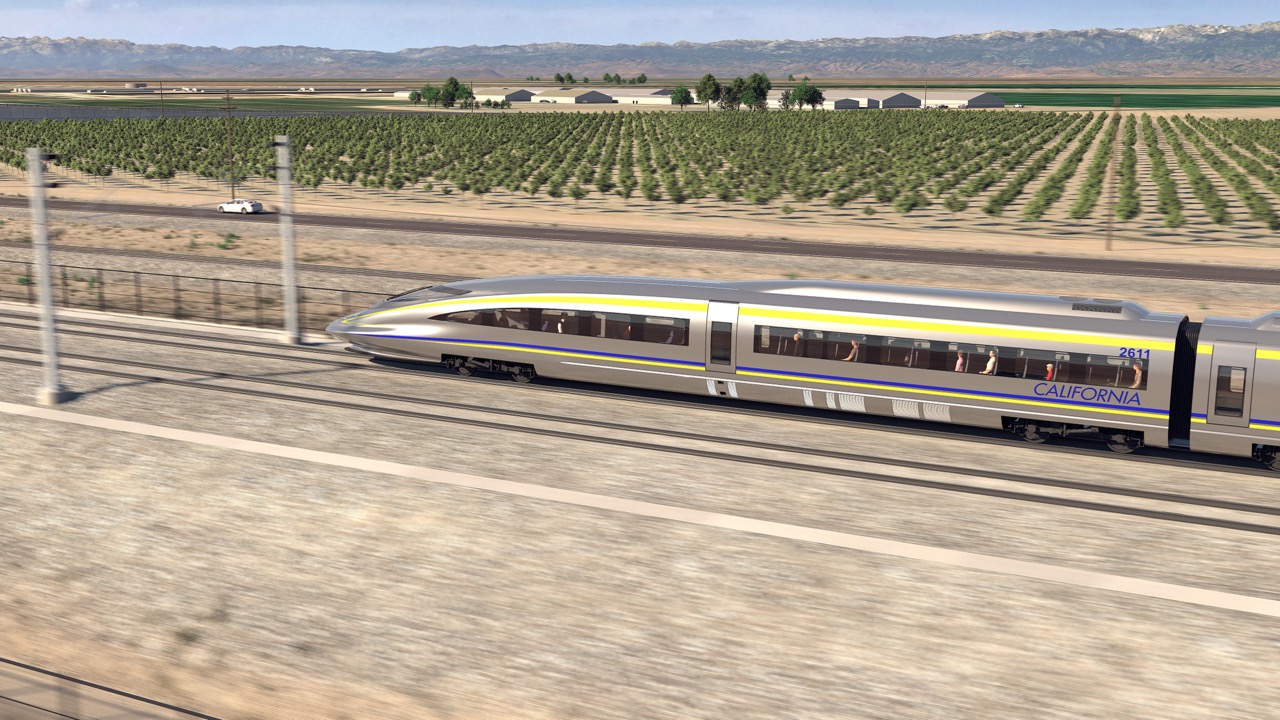

The California High-Speed Rail Authority has signed an agreement with local transit authorities to better coordinate on a crucial component of the state’s ambitious bullet train plan.
On Monday, the Authority announced it had signed a memorandum of understanding with the High Desert Corridor Joint Powers Agency, a Southern California entity that represents communities in Los Angeles and San Bernardino counties, to formalize long-discussed plans to connect the state’s two high-speed rail projects.
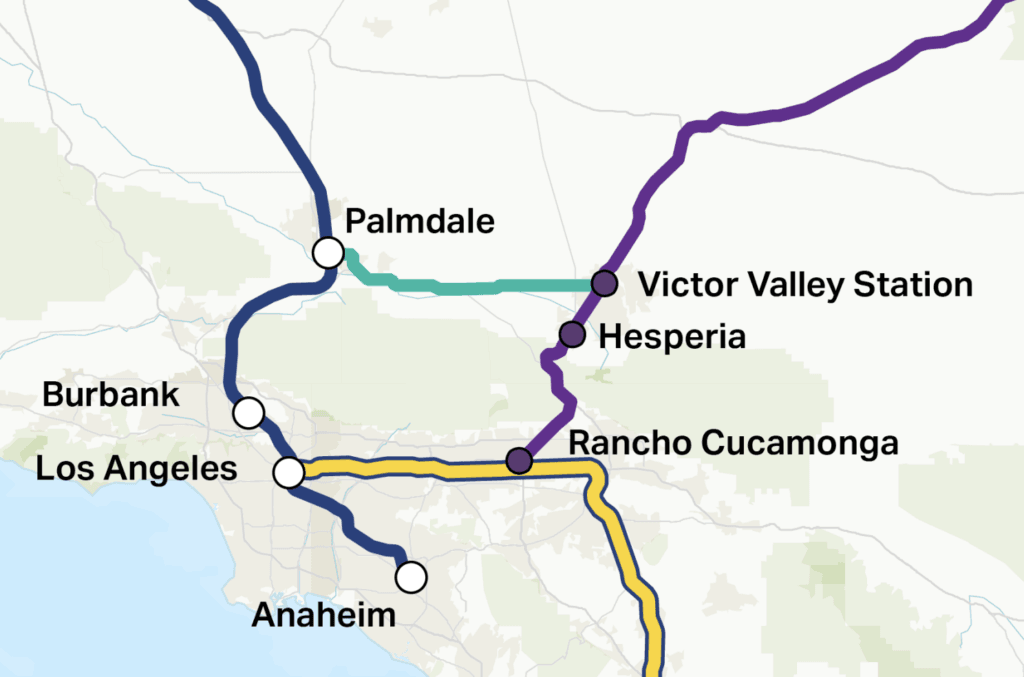
According to a press release from the California High-Speed Rail Authority, the agreement establishes joint planning for station design, environmental reviews and engineering, with a primary focus on a shared station in Palmdale.
Authority officials said the partnership seeks to “accelerate delivery” of the proposed rail corridor and lower overall costs to the public through joint material purchases and aligned construction schedules.
What is the High Desert Corridor?
The High Desert Corridor is a 54-mile high-speed rail line that slices east to west through the Mojave Desert and would connect Palmdale with Victor Valley to link the California High-Speed Rail with another bullet train system: Brightline West.
It’s a critical part of the state’s broader rail goals, as it would close the gap between the state-operated high-speed rail and the privately operated Brightline system, which aims to connect Las Vegas with Southern California via Rancho Cucamonga.
California High-Speed Rail Authority CEO Ian Choudri said this week’s agreement “underscores the momentum behind building a clean, modern transportation system that will serve Californians for generations.”
While both projects have been in planning stages for years, officials say this agreement is a necessary procedural move to make the connection between the two systems a reality.
Los Angeles County Supervisor Kathryn Barger, who serves as chair of the regional agency that also represents desert communities of Palmdale, Lancaster, Adelanto and Victorville, said the agreement is “a pivotal step toward a fully connected, electrified high speed rail network across California.”
Barger added that the collaboration reflects a “commitment to sustainable growth, reduced congestion and equitable benefits for our communities.”
When will the California High-Speed Rail be completed?
The California High-Speed Rail has been plagued by ballooning costs, inconsistent funding sources and legal and environmental challenges since crews first broke ground in 2015.
Choudri, who has an extensive background in infrastructure and has worked on high-speed rail projects in France and Spain, has aimed to retool the project to ensure it gets done sooner rather than later.
Since taking the reins of the state agency in 2024, Choudri has tried to obtain more participation from the private sector, and the original taxpayer-only funding model has shifted under his direction.
Read More: Amtrak’s high-speed trains have already logged 1 million riders
Last month, the authority CEO said the project was finally at its turning point and described June 2026 as “one of the most consequential months in the history of the California High-Speed Rail program.”
Still, an exact (or even abstract) timeline for the project’s completion remains uncertain. State officials have previously identified the early 2030s as the planned operation date for the initial operating segment within the Central Valley, stretching from Merced to Bakersfield.
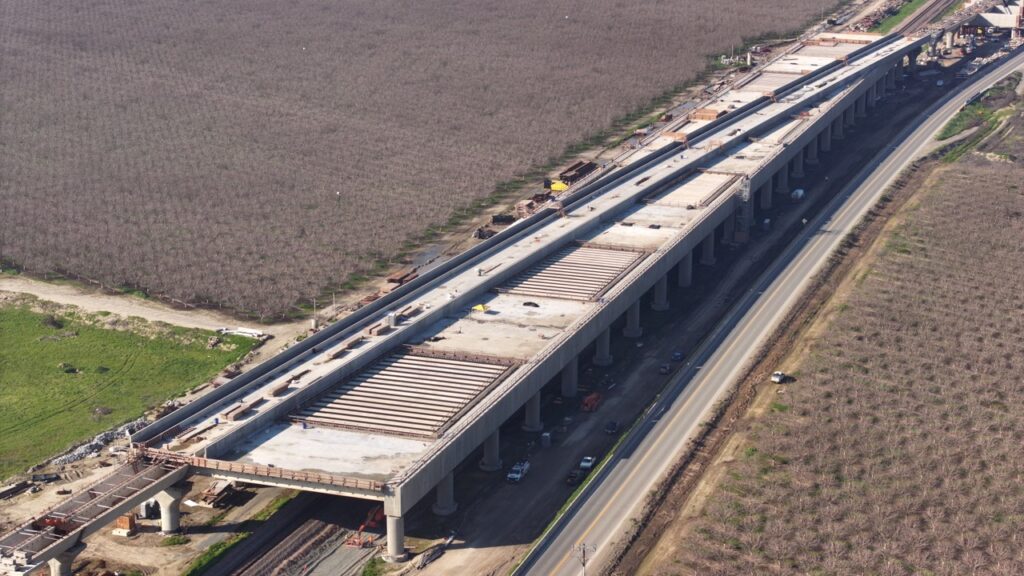
Construction of the initial segment remains ongoing. Officials say they plan to lay the very first miles of track and begin electrification and systems installation later this year.
Roughly 90 miles of guideway are finished in the Central Valley, alongside 61 completed major structures. Another 30 structures remain under construction across Madera, Fresno, Kings and Tulare counties.
Nearly all of the proposed 494-mile system between San Francisco and the Los Angeles area have received environmental clearance, with the last remaining portion between L.A. and Anaheim expected to be cleared soon.
The California High-Speed Rail Authority is also far along in the process of selecting a manufacturer to build its high-speed trainsets.
Still, the project continues to face scrutiny over costs, timelines and long-term viability, though officials frequently tout the local economic impacts of the project. State officials say construction in the Central Valley has created nearly 19,200 jobs and generated nearly $27 billion in economic impact. Up to 1,700 workers are present at job sites daily, according to a news release.
Despite the optimism, Monday’s agreement has no effect on the underlying funding challenges or long-term operational timelines facing the state’s broader high-speed rail network.
The promise of San Francisco to Los Angeles in under three hours still remains a concept, although measurable progress has been made toward that goal.
For more stories like this, follow Rabble News on Instagram and Facebook.
