
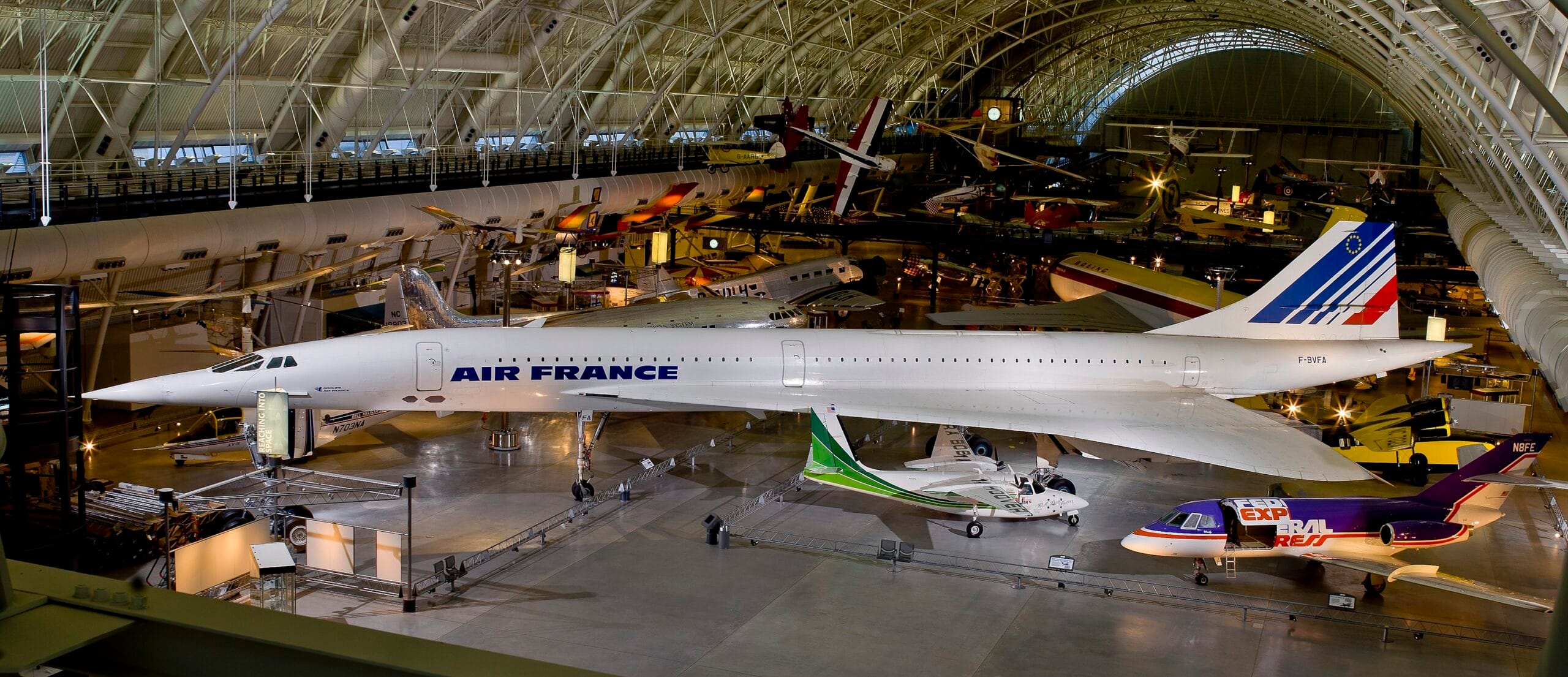

Commercial jets capable of traveling faster than the speed of sound could soon return over U.S. skies thanks to new rulings from the Federal Aviation Administration.
On Tuesday, U.S. Transportation Secretary Sean Duffy announced that the FAA was taking a “pivotal step” toward allowing the civil use of supersonic flights over the continental U.S.
The FAA hopes to have new rules finalized by next year, ending the 1973 ban of civilian supersonic flights over the U.S., which was put into place decades ago due to negative public opinion, according to travel publication Skift.
Supersonic jets are capable of reaching speeds faster than the speed of sound and, with that, causing ear-shattering sonic booms in their wake.
FAA Administrator Bryan Bedford said new technological advances in aerospace engineering, materials science, and noise reduction have essentially made sonic booms a thing of the past for these blazingly fast planes.
Now the FAA, under President Donald Trump and Duffy’s direction, has decided it is time to lift the ban.
“FAA has determined the general ban on civil supersonic flight is outdated and no longer appropriate due to advancements in technology, flight techniques that prevent sonic booms from reaching the surface, and increased interest in civil supersonic flight,” FAA documents state. “FAA proposes to repeal this outdated and unnecessary prohibition and establish a corresponding interim noise-based certification standard to allow supersonic flights without an operation-specific special authorization clearing the way for next-generation supersonic flight.”
What is supersonic flight?
Supersonic aircraft can break the speed of sound (Mach 1), traveling at speeds of around 770 mph. Commercial airlines, meanwhile, travel around 550 to 600 mph.
These increased speeds could significantly slash travel times on major transoceanic flights, including potentially connecting London to New York in about three hours.
But Duffy claims these new rules aren’t simply about going faster, but rather “unleashing American innovation and ushering in a golden age of travel.”
“Thanks to President Trump’s leadership, we are working at lightning speed to safely enable the next quantum leap in aviation technology and deliver an exciting new way to fly to the American flying public,” Duffy said in an FAA news release.
Currently, supersonic flight is strictly prohibited for most non-military uses. But it wasn’t always that way.
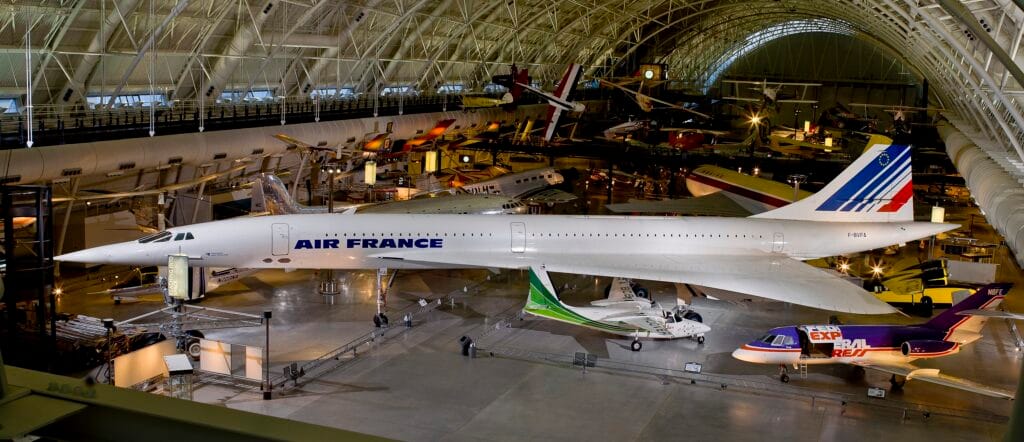
Beginning in the 1970s, Europe-based Concorde debuted as a “supersonic airliner,” conducting commercial and passenger flights between Europe and the East Coast, primarily between London or Paris to New York City or Washington D.C., as well as some other short-lived international routes.
Concorde traveled at speeds of twice the speed of sound and carried up to 100 passengers in a high-class, luxury setting.
Soviet Tupolev also conducted commercial flights in the 1970s-1980s, including a brief passenger service.
But Concorde ultimately discontinued its service entirely in 2003, hampered in large part by U.S. flight restrictions, but also due to the exorbitant ticket prices and fuel costs associated with reaching such speeds and expensive maintenance of its aging fleet.
The airliner also experienced decreased demand, made worse by the Sept. 11 terrorist attacks, that made it hard to justify remaining in business.
Read More: Unqualified employee piloted several private jet charters, FAA alleges
It’s been more than 20 years since the last supersonic commercial flights, and it remains to be seen if its a technology that could see a resurgence like Duffy claims.
An American company called Boom Technology seems best poised to succeed where other supersonic airliners have failed, but any commercial airline looking to benefit from these relaxed FAA rules will have myriad challenges.
Fuel prices in the 2020s are more expensive than ever, affordability and inflation has wreaked havoc on the global economy and many Americans are opting for non-traditional vacations and getaways.
A new generation of supersonic airliners likely would run into the same problems that grounded Concorde, meaning supersonic flight might be limited to the global elites and hardcore aviation enthusiasts.
Although, a robust market may exist for faster movement of goods.
How new technology prevents sonic booms
According to the U.S. Air Force, a sonic boom is caused when an object moving faster than the speed of sound continuously produces air-pressure waves that eventually combine and release in a single powerful shock wave.
Until recent advancements, preventing them has been difficult.
One way to mitigate sonic booms is through “Mach cutoff,” a flight technique that utilizes atmospheric conditions, speed, altitude and the aircraft’s design to “ensure the sonic boom bends and refracts back into the atmosphere, significantly reducing its ground-level impact.”
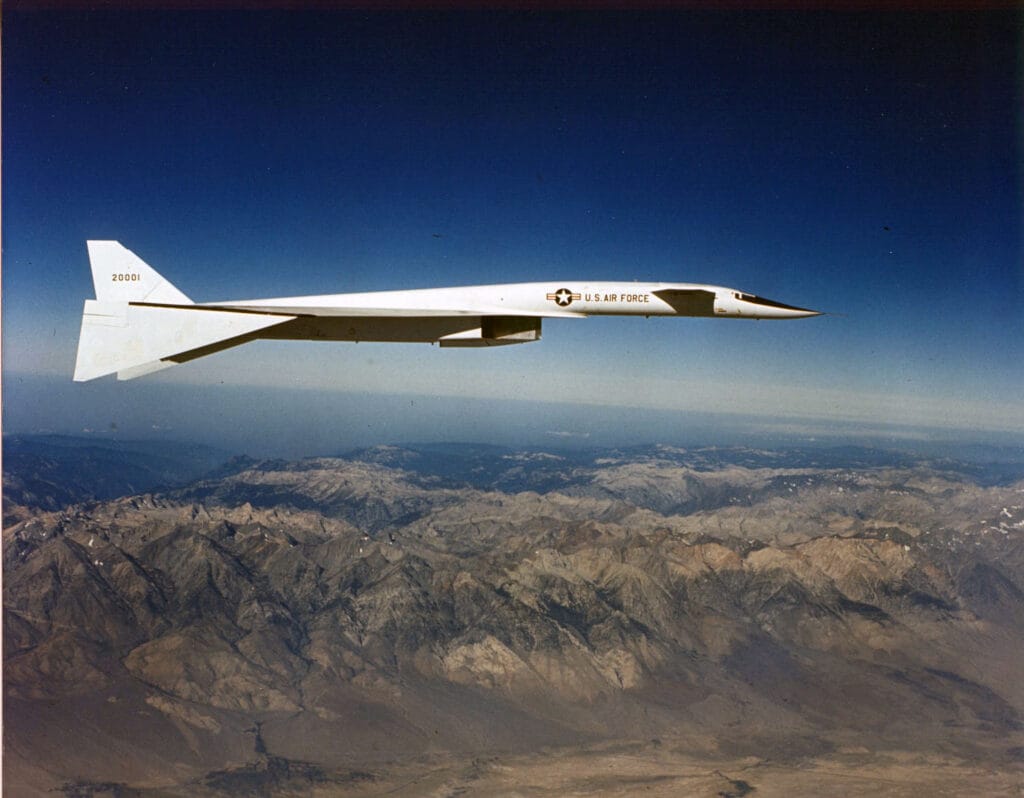
The FAA says it is in collaboration with the International Civil Aviation Organization, NASA, industry experts and academic leaders to put sonic boom research into use as it drafts noise-based certification standards.
Another FAA rule is in the works to establish noise standards for supersonic aircraft when landing and taking off.
“This means we can ultimately repeal the ban from the 1970s on supersonic flight over U.S. territory while minimizing noise impacts to residents in communities along the route and near airports,” Bedford added.
Both rules are expected to be finalized by mid-2027, officials said.
The FAA is also working to come up with safety agreements with international aviation authorities regarding the use of supersonic aircraft.
For more stories like this, follow Rabble News on Instagram and Facebook.
