
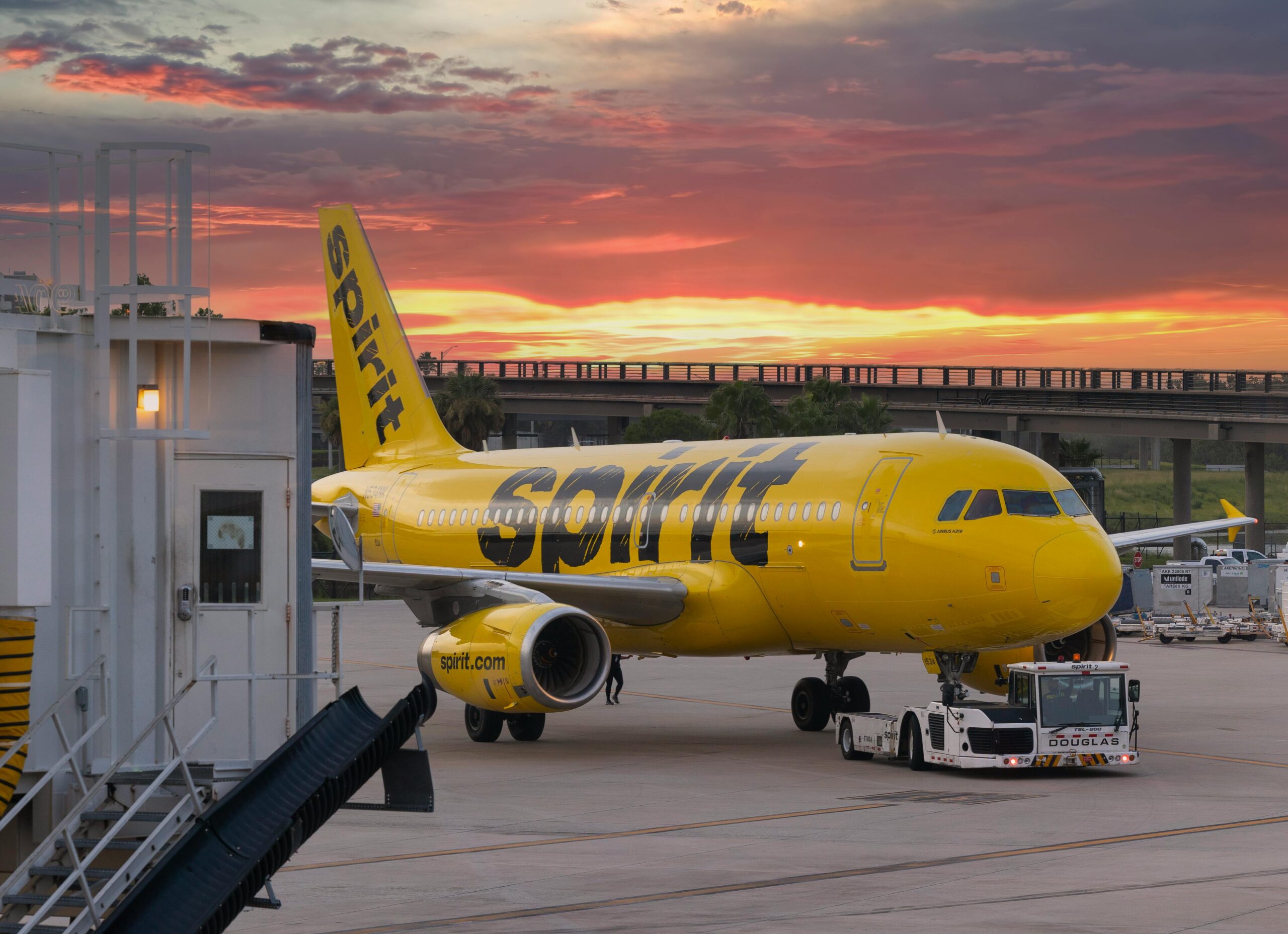

The Trump Administration is nearing a deal to provide taxpayer money to Spirit Airlines in exchange for equity in the company in an unconventional act of government intervention.
According to the Wall Street Journal, the U.S. Federal Government plans to provide Spirit Airlines with rescue funds in order to stave off a potential collapse and liquidation.
Last week, as first reported by Jon Ostrower, editor-in-chief of the online airline publication the Air Current, Spirit began courting federal funds and had offered equity in the company in order to keep the low-cost carrier afloat.
On Wednesday, citing people familiar with the discussions, the Journal reported that the Trump Administration was on the precipice of approving as much as $500 million in rescue loans in exchange for a “potential significant stake” in the company.
Conversations have involved President Trump and both the secretaries of the U.S. Department of Transportation and the Department of Commerce, WSJ reports. While talks are in advanced stages, a formal agreement has not yet been agreed upon.
“The Trump administration continues to monitor the situation and overall health of the U.S. aviation industry that millions of Americans rely on every day for essential travel and their livelihoods,” White House spokesperson Kush Desai told the Journal on Wednesday.
Trump had publicly floated the idea of coming to Spirit’s aid in an attempt to save about 14,000 jobs.
Read More: With gas prices soaring, are more people taking public transit?
The act of providing government funds in exchange for company equity was previously unheard of at the federal level, but has become increasingly common in the second Trump term.
Last year, the Federal Government became the largest shareholder in technology company Intel, having acquired near 10% of the company’s shares after having identified the business’s semiconductor manufacturing segment as being important to the nation.
According to the Wall Street Journal, the Trump Administration has also invested in a semiconductor manufacturing startup founded by Intel’s former CEO, as well the Pentagon and Commerce Department reaching separate deals to dip into the rare-earth metals industry.
“While the government has helped the airline industry in times of crisis, like the aftermath of the Sept. 11 terrorist attacks and the Covid-19 pandemic, rescuing Spirit would be a rare intervention to prop up a single carrier,” the Wall Street Journal writes.
A bailout of Spirit Airlines would delay the inevitable
Airline and travel publication One Mile At a Time didn’t mince words when it called the potential bailout a “terrible idea.”
“It’s really unfortunate to see the tough financial spot Spirit Airlines is in, and the airline industry in the United States has evolved in such a way that it’s really hard for the smaller carriers to compete,” Ben Schlappig of One Mile At a Time writes. “That being said, no matter how you slice it, this simply sets an awful precedent, and makes no sense.”
Schlappig posed several questions related to the Trump Administration’s looming intervention, wondering why Spirit in particular should receive taxpayer funds while the entire airline industry, especially low-cost carriers, are struggling.
He also raised the alarm about a potential conflict of interest if the government owned a significant stake in one company in a highly competitive industry.
But the biggest reason for concern, Schlappig said, was that the intervention seemed to only be delaying the inevitable.
Spirit Airlines is one of the largest low-cost carrier in the U.S., and has been in near-constant financial crisis for the better part of the decade. After two failed merger attempts with competitors, Frontier and later JetBlue, Spirit has struggled to find financial stability. (Desai blamed much of the company’s current struggles on the Biden Administration blocking the JetBlue merger.)
The company filed for Chapter 11 bankruptcy in November 2024 and managed to emerge with the company in tact the following March. But less than a year after its initial filing, Spirit again filed for Chapter 11, citing high fuel costs, failed restructuring efforts and continued financial challenges from lack of cash on hand.
Even if Spirit Airlines receives a cash infusion to avoid liquidation, Schlappig finds it unlikely the company will be able to turn things around.
Spirit, like the entire travel industry, has been hit hard by rising fuel costs that have only gotten worse with the U.S.’s war in Iran. Airlines, especially low-cost carriers, have struggled to keep up with the soaring price of jet fuel, which nearly doubled in just a few weeks after the military intervention first began.
But Spirit, Schlappig said, has been unable to turn an operating profit even before the price of jet fuel skyrocketed.
The Wall Street Journal reports that a bailout seems to be on the one-yard line, but talks could break down at any point.
It was previously reported that Transportation Secretary Sean Duffy was scheduled to meet with the heads of several prominent low-cost carriers to discuss the state of the industry. That meeting was said to be taking place some time this week.

3 Comments
Pingback: Avianca adds 42 flights, resumes routes in major U.S. summer push
Pingback: Trump adds likeness to 250th anniversary passports
Pingback: Spirit Airlines customers likely won't receive refunds